Tag: Macroeconomics

  • Profit-Price Spiral: Excess Profits Fuelling Inflation & Interest Rates, not Wages

    The dramatic expansion of business profits has gone mostly ignored by the RBA and other macroeconomic policy-makers, who have focused instead on a supposed ‘wage-price’ spiral which does not exist. This suggests the focus of the RBA on wage restraint is misplaced and unfair, and that interest rates would be far lower today if companies had not gouged customers at the checkout.

    The report Profit-Price Spiral: The Truth Behind Australia’s Inflation (attached) comes in the same week supermarket giants Woolworths and Coles posted soaring profits, with banks, gas and petrol companies posting similarly soaring returns.

    Key Findings:

    • A Profit-Price spiral is the main driver of inflation in Australia, rather than a supposed “Wage-Price” spiral, which does not exist
    • As of the September quarter of 2022 (most recent data available), Australian businesses increased prices by a total of $160 billion per year over and above their higher expenses for labour, taxes, and other inputs, and over and above profits generated by growth in real economic output
    • Without the inclusion of those excess profits in final prices for Australian-made goods and services, inflation since the pandemic would have been much slower: an annual average of 2.7% per year, barely half of the 5.2% annual average actually recorded since end-2019.
    • That pace of inflation would have fallen within the RBA’s target inflation band (equal to its 2.5% target, plus-or-minus 0.5%)
    • Excess corporate profits account for 69% of additional inflation beyond the RBA’s target. Rising unit labour costs account for just 18% of that inflation
    • The RBAs 9 back-to-back interest rate rises would have been unlikely without excess profits and prices based on the RBA’s own policy framework
    • Real wages in Australia fell 4.5% in 2022, the largest fall on record

    “This empirical evidence shows excess corporate profits are the main culprit driving inflation, not workers’ wages,” said Dr. Jim Stanford from the Australia Institute’s Centre for Future Work.

    “For Australians doing it tough this data would be aggravating.

    “We’ve been told a story that workers need to restrict wage growth and accept a permanent reduction in living standards in order to fix inflation. This evidence shows that’s an economic fairytale.

    “ABS data shows that without excess price hikes through the pandemic, inflation would likely be within the RBA target band, and hence there would be no need for the nine extreme, back-to-back interest rate rises that are crushing households and mortgage holders, fuelling the cost-of-living crisis.

    “The pain experienced by workers through current inflation contrasts sharply with unprecedented increases in business profitability at the same time.

    “Through this episode of post-COVID inflation, real wages have declined rapidly, labour’s share of GDP has declined, and corporate profits have set records. That is completely opposite from the experience of the 1970s, when real wages rose, labour’s share of GDP increased, and corporate profit margins fell.

    “History confirms that fears of a 1970s-style ‘wage price spiral’ are simply not justified or grounded in reality. Instead, inflation in Australia since the pandemic clearly reflects a profit-price dynamic.”

    The new report ‘Profit-Price Spiral: The Truth Behind Australia’s Inflation’ is attached and comes from the Australia Institute’s Centre for Future Work, by Dr. Jim Stanford.

    Supermarkets, banks and petrol companies have recently posted huge profits:

    The post Profit-Price Spiral: Excess Profits Fuelling Inflation & Interest Rates, not Wages appeared first on The Australia Institute's Centre for Future Work.
  • With interest rates set to rise another 3 times, no wonder consumers are feeling grim

    Right now Australian consumers have less confidence than they did in April 2020 when the entire world was locked down and the pandemic was raging without any prospect of a vaccine.

    That might suggest that Australians are overly pessimistic, especially given unemployment is at generational lows of 3.5%, but when you look at the statements of the Reserve Bank and its projections for the next 2 years, it is little wonder Australians are worried.

    Last week the RBA not only lifted the cash rate for the 9th straight time, it signalled that there would be a plural number of rises to come. In response, the market now anticipates at least three more rate rises, with a slight chance of 4 more. That would be easily the fastest and largest raising of interest rates since the late 1980s. And Australians are well aware of what occurred after the 1980s rate rises.

    Indeed even the Reserve Bank is anticipating a sharp slowing of the economy. While not suggesting a recession is imminent, in its latest Statement on Monetary Policy the RBA forecast 2 straight years of GDP growth of less than 1.8%. That would equal the record length of less than 2% growth during the 1990s recession. In reality, anytime Australia’s economy has grown by less than 2% for just one year there has been either a recession or near recession conditions such as during the GFC.

    Australians are right to be wary especially as their standard of living has suffered a sharp decline in the past year as incomes fail to keep up with inflation.

    The Reserve Bank of course does need to be concerned about inflation but given the expectations of recessions of slight contractions in the UK, USA and Europe the risk of a recession should be weighed much higher than they currently are.

    The post With interest rates set to rise another 3 times, no wonder consumers are feeling grim appeared first on The Australia Institute's Centre for Future Work.
  • The Reserve Bank is betting that monetary policy is not powerful

    On Tuesday the Reserve Bank lifted the cash rate to 3.35%, making for a total increase of 325 basis points since May last year. That rise is the fastest since the rises prior to the 1990s recession. And yet, as policy director Greg Jericho, notes in his Guardian Australia column, the Reserve Bank still think more is needed.

    The Governor’s statement concluded that “the Board expects that further increases in interest rates will be needed over the months ahead”. The use of the plural “increases” was a change from the language used in December. This is despite the bank and most economists acknowledging that inflation peaked in December and that global inflation is now falling.

    The RBA acknowledges that the full impact of the rate rises has yet to flow through, and how remains wedded to the policy that the economy is running too hot, despite wage growth likely still in the low 3% range. Most households have yet to feel the impact of around a third of the total amount of the rate rises thus far. With more rate rises forecast to come, that suggests a further increase of around $400 a month in mortgage repayments on a $500,000 loan even before any more rate rises occur. That would suggest a 45% increase in mortgage repayments since April.

    This drastic raising in rates will serve to slow an already slowing economy. The December quarter retail trade figures showed that retail turnover volume was down for the fourth straight quarter, and forecasts for GDP growth estimate very weak growth for two years.

    That the Reserve Bank continue to hike rates without pause suggests a lack of faith in its biggest weapon to reduce inflation, and also that it can finesse rate rises and economic growth. There is no need to keep hurting households without relief or pause – especially given so much of the rate rises remain yet to be felt.

    The post The Reserve Bank is betting that monetary policy is not powerful appeared first on The Australia Institute's Centre for Future Work.
  • As interest rate rises bite, the Reserve Bank should not raise rates next week

    Since May last year, the Reserve Bank has increased the cash rate from 0.1% to 3.1%. The latest cost of living data released this week reveals that this has incurred a 61% rise in mortgage repayments for the typical employee household.

    As policy director, Greg Jericho notes in his Guardian Australia column, this increase has had a dramatic effect on people’s ability to spend money elsewhere. The latest retail trade data released on Tuesday showed a dramatic fall in retail spending in December. The 3.9% fall in the nominal amount spent is increased once you consider the inflation. Even if you account for the tendency for monthly figures to be erratic, the last three months of 2022 saw a stalling of retail spending and a decline in real terms.

    Clearly, the rate rises are forcing people to spend less on retail items and other discretionary purchases. This of course is the intended impact. Raising interest rates increases the cost of borrowing and reduces the level of demand in the economy. But the danger is that the Reserve Bank increases interest rates so fast and so greatly that it slows demand by more than is needed.

    Given the impact of the 300 basis points rises has yet to fully flow through as current mortgage holders typically see their interest rates rise only a month or two after each increase by the Reserve Bank we can expect the cost of mortgage repayment to keep rising in the first quarter of this year.

    With the data already showing the pain of rate rises is causing changes in household spending. The Reserve Bank shod not raise the cash rate when it meets next week, but wait to see the full impact flow through to the economy. After a 300 basis points rise in 8 months no one can suggest the Reserve Bank has been too timid. The fast increase now gives them room to wait and observe rather than keep slamming on the brakes.

    The post As interest rate rises bite, the Reserve Bank should not raise rates next week appeared first on The Australia Institute's Centre for Future Work.

  • Inflation looks to have peaked but the RBA set to keep raising rates

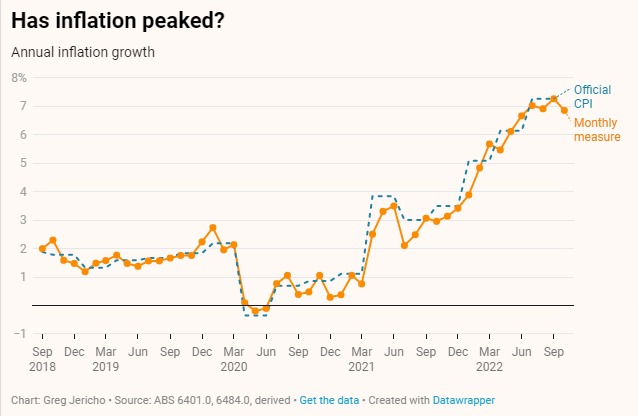
    The latest inflation figures showed that in 2022 prices rose faster on average than they have for 32 years. But while this speed might suggest inflation remains out of control, as policy director Greg Jericho notes in his Guardian Australia column, the data suggests that inflation likely has peaked.

    Jericho notes that inflation in the December quarter was driven by abnormal jumps in the prices of holidays. Rather than being a sign of prosperity and an overabunance of demand in the economy, more this is a sign of a return to some sort of normality after the lockdown in previous years due to the pandemic.

    Similarly a jump in the cost of restaurant meals and takeaway food reflects the ongoing strength in that sector as it fully recovers from the pandemic rather than a sign that eocnmic demand is surging.

    The belief that inflation has peaked is also driven by the fact that the prices of goods – especially those driven by international prices – have begun to stabilise. While they continue to grow at paces well above 3%, no longer is the growth rising.

    That inflation may be peaking however does not mean there is no pain for householders. Grocery prices mostly rose faster than overall inflation with milk and bread rising 18% and 13% respectively. The increases in rental prices are also now showing up in the data. Rents in all capital cities are rising sharply, and in Adelaide and Brisbane they grew faster in 2022 than they have since 2009.

    Amid all this pain, and with economists believing the peak has been reached, the Reserve Bank is still expected to raise rates again next month. This greatly risks slowing the economy more than it needs to and will certainly increase the cost of living for many households.

    This latter aspect is most important given the latest inflation figures suggest that real wages have plummeted by more than 4% in 2022. If we assume wage growth in 2022 of 3.25% (slightly above expectations), real wages will now be back at the level they were in June 2009.

    This period of rising inflaiton has been terrible for workers.

    The post Inflation looks to have peaked but the RBA set to keep raising rates appeared first on The Australia Institute's Centre for Future Work.

  • The Reserve Bank needs to wait before raising rates again

    In 8 months the Reserve Bank raised the cash rate from 0.1% to 3.1% in an effort to slow inflation growth which has been increasing around the world. But while many things in the economy remain affected by the pandemic and its ructions, the impact of interest rate rises remains the same.

    As policy director, Greg Jericho notes in his column in Guardian Australia, the latest lending data reveals that home loan numbers have fallen by 25% over the past year. The cost of repaying an average new mortgage in Sydney or $750,000 has increased by more than third and as a result fewer people are taking out loans and house prices are falling.

    This fall in the price of the item most directly affected by interest rates however is not reflected in the official CPI figures. Rather than measure house prices, the CPI measures the cost of “new dwelling purchases by owner-occupiers”. This is actually the cost of building a new home. In the year to September 2022 (the most recent CPI figures) this item accounted for a quarter of the total growth of inflation. And yet while “new dwelling purchases” rose by 21% the price of dwellings across Australia rose by just 1%.

    This means that inflation is not truly reflecting the impact of interest rates. Rising interest rates do slow the economy, they do reduce the level of money available to mortgage holders to spend on other item and thus reduce demand. That the official CPI figures are not fully showing this does not mean the Reserve Bank needs to keep raising rates.

    The Reserve Bank has already raised rates at a historically fast pace. They have slammed on the brakes as hard as they have at any time in the past 30 years. Given economists around the world are predicting a slowdown in the global economy and here in Australia, the RBA needs to pause its rate rises and not keep hitting the brakes on an already slowing economy.

    The post The Reserve Bank needs to wait before raising rates again appeared first on The Australia Institute's Centre for Future Work.

  • The Reserve Bank needs to watch that it doesn’t push the economy off a cliff

    But as Labour Market and Fiscal Policy Director, Greg Jericho, notes in his Guardian Australia column, the latest monthly inflation figures out yesterday suggest that maybe the peak could be lower than anticipated.

    While the monthly figures can be a little erratic, they do closely align with the quarterly “official” CPI figures and in October the ABS estimates that annual inflation growth fell from 7.3% to 6.9%. Better still this makes 4 months in a row where inflation has remained around 7%, rather than increasing quickly as it has since the middle of last year.

    Combined with the latest Retail Trade figures released this week which showed the dollar amount spent in the shops fell in October, and the volume of spending falling even faster, there are solid signs that the interest rate rises are having an impact.

    This means the Reserve Bank needs to be very cautious as much of the impact of the rate rises from September October and November has yet to flow through into the data. And because the rates of existing mortgages take longer to rise than do rates for new home loans this also means that even were the RBA to halt rate rises, for most mortgage holders rates will still be about to rise over the next few months.

    The IMF, OECD, Treasury and the RBA itself all forecast a sharp slowing of Australia’s economy next year and into 2024. The rationale has been that this is the cost of needing to reduce inflation, but the central bank needs to be very careful that it does not commit overkill. With the economy and consumer spending already slowing, and inflation showing some good signs that growth is no longer increasing at a rapid rate, the RBA should strongly consider not increasing the rate next week in its final board meeting of the year.

    The post The Reserve Bank needs to watch that it doesn’t push the economy off a cliff appeared first on The Australia Institute's Centre for Future Work.

  • Gas companies are profiting off of human misery – we need a windfall profits tax

    But none of these profits have come from either management decisions or productive investments. The price rise has not come from any economic improvements. No, they have come only from an illegal invasion that is causing great human misery.

    Labour market and fiscal policy director Greg Jericho notes research suggests that the gas sector has accrued around $26bn in profits due to price rises affected by the Russian invasion. He argues that all of these profits should be garnered in taxation – a view that echoes that of former Treasurer Secretary Ken Henry.

    This revenue would be enough to cover the cost of rewiring the nation and greatly assist the tradition to renewables.

    But the problem of revenue are much deeper than the need for a windfall profits tax.

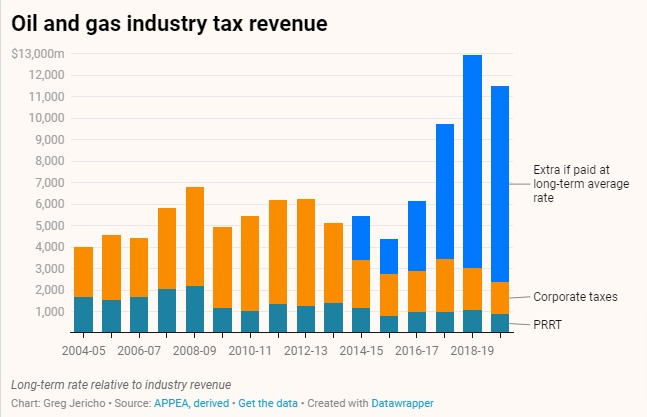
    Jericho’s analysis of industry data reveals that the industry pays much less company tax relative to production than it did in the past.

    Had the industry paid the same level of company tax relative to revenue that is had in the decade prior to the opening of the Gladstone port, in 2019-20 alone, an extra $9.1bn in tax revenue would have been raised.

    Oil and gas are Australia’s resources. Not only are their emissions causing climate change but the profits are largely headed overseas, and more than in the past not flowing through into taxation.

    As Australians demand better and wider government services, and the costs of dealing with climate change grow ever higher, we need to ensure the fossil fuel companies pay their rightful share.

    The post Gas companies are profiting off of human misery – we need a windfall profits tax appeared first on The Australia Institute's Centre for Future Work.

  • Would further interest rate rises do more harm than good?

    Over the past year, the main driver of inflation has been house prices accounting for a quarter of the 7.3% rise in the CPI. And yet we know that house price growth is now either slowing dramatically or even falling in some areas. The RBA has also noted that commodity prices are falling and supply-side issues are being dealt with and that these aspects, which are not influenced by interest rates, will reduce inflation next year.

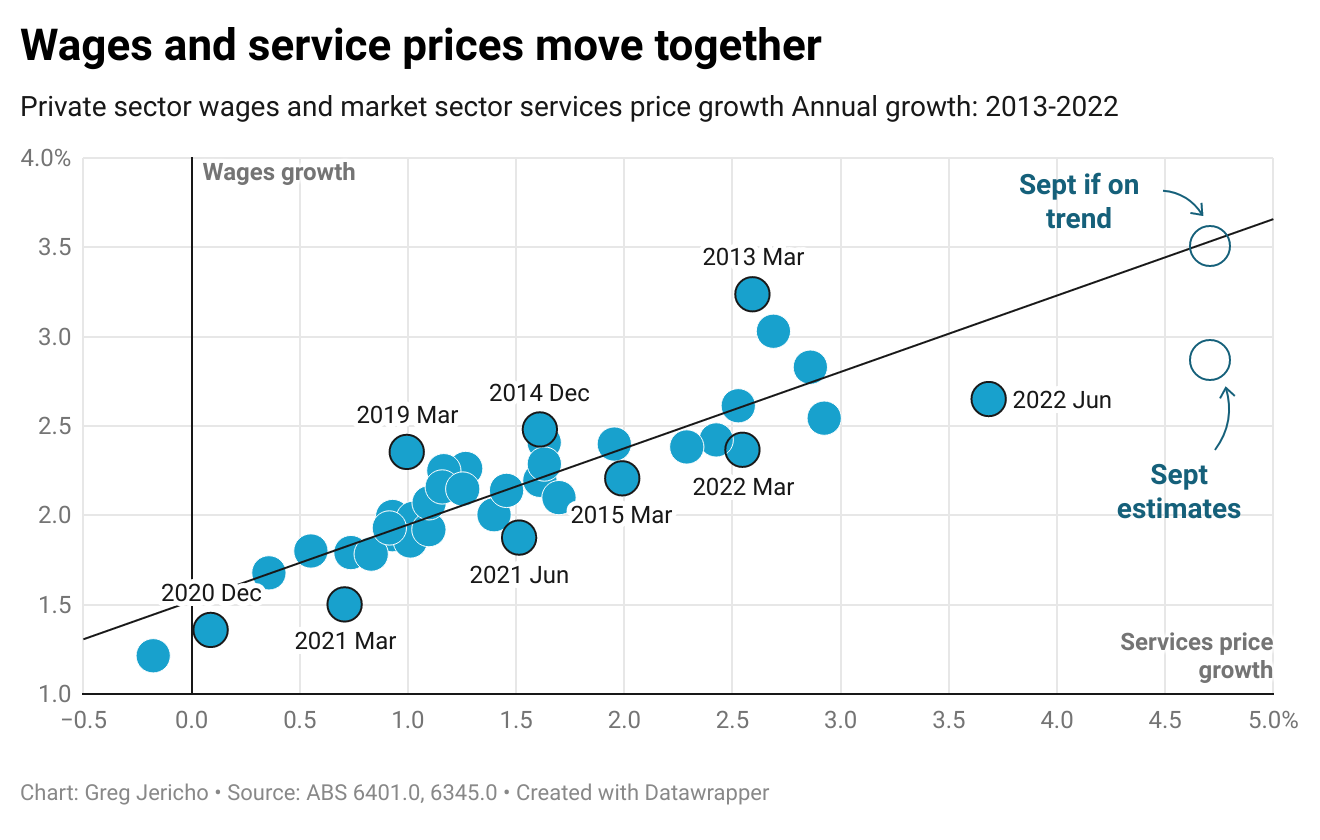
    At the same time, the Reserve Bank continues to sound warnings of a wage-price spiral despite any evidence of such a thing occurring. Indeed the latest CPI figures show that overwhelmingly inflation is driven by the price rises of goods rather than services. This is important because service prices and wages are strongly linked.

    More rate rises will certainly continue to reduce demand in the economy as the cost of servicing a mortgage rises. But to what end? The main factors driving inflation are easing, wages have not risen above 3% yet, let alone to a rate anywhere near inflation.

    Even if wages were to rise in line with the historical link with service prices, in September they would have risen 3.5% – a level very much consistent with inflation growth of between 2% and 3%. And yet we know that wages are unlikely to rise that fast. The most recent estimates have it closer to 2.8%.

    The great risk now is that further rate rises will only hurt the economy for little gain and see wages growth stunted before they even get to a level that would see real wages rising.

    The post Would further interest rate rises do more harm than good? appeared first on The Australia Institute's Centre for Future Work.

  • Inflation is soaring and real wages are plummeting

    The biggest concerns about the figures are that inflation is rising fastest for items that are non-discretionary, which means people are unable to avoid paying them – things like food, energy bills, transport costs, and health costs. As Labour market and fiscal policy Director, Greg Jericho, notes in his Guardian Australia column low-middle income earners have to spend a greater share of their income on these items than the average, which means they are hurt hardest.

    The inflation figures also show that while house prices are still rising strongly, the rising interest rates are now starting to truly have an impact on rents. Rental prices across every capital city rose by more than 1% in the September quarter – the first time that has happened since 2007.

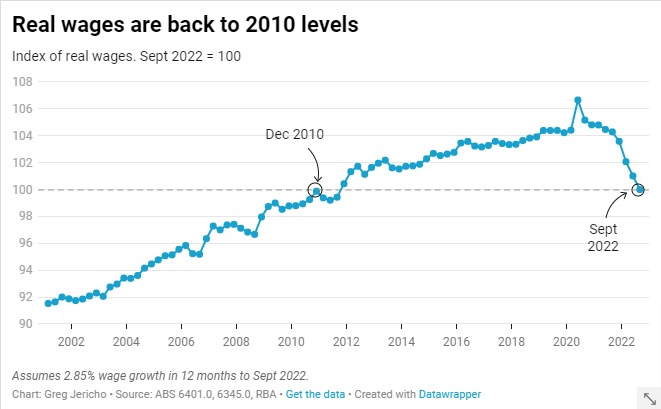
    But the real damage of inflation is seen in relation to wage growth. The Reserve Bank estimates that wages in the 12 months to September will have grown just 2.85%. This means people’s ability to buy things with their wages has fallen over 4% in the past year. This is a massive drop in real wages and unfortunately, it is expected to continue at least until the middle to end of next year.

    Right now real wages are back where they were 12 years ago. It is a damning indictment of the Industrial Relations system that has been designed to keep wages down. The Government today has introduced the Fair Work Legislation Amendment (Secure Jobs, Better Pay) Bill 2022 which seeks to provide workers with greater power to bargain for better wages. Given the latest figures, it is clear how urgently the changes are needed.

    The post Inflation is soaring and real wages are plummeting appeared first on The Australia Institute's Centre for Future Work.