Tag: Housing

  • To really address housing affordability we need to think differently

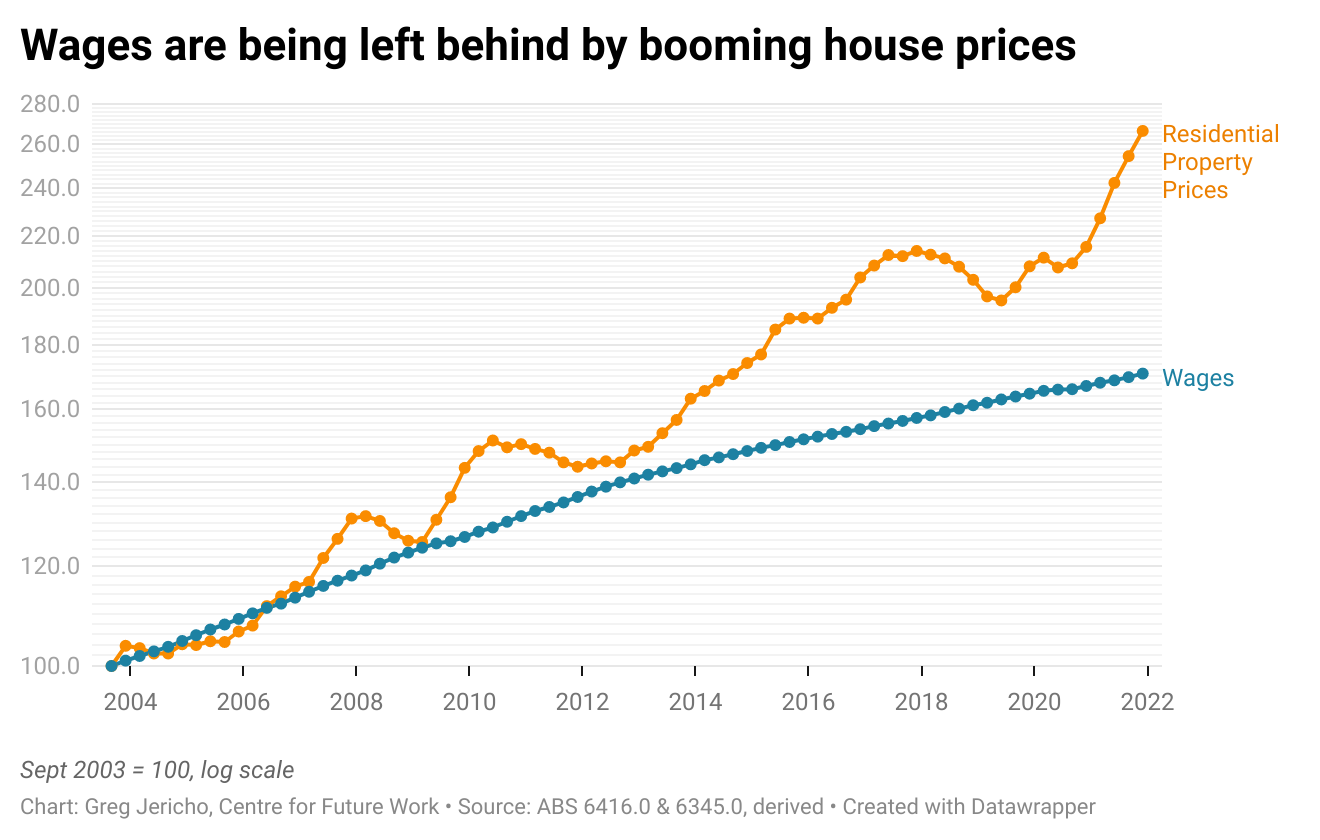
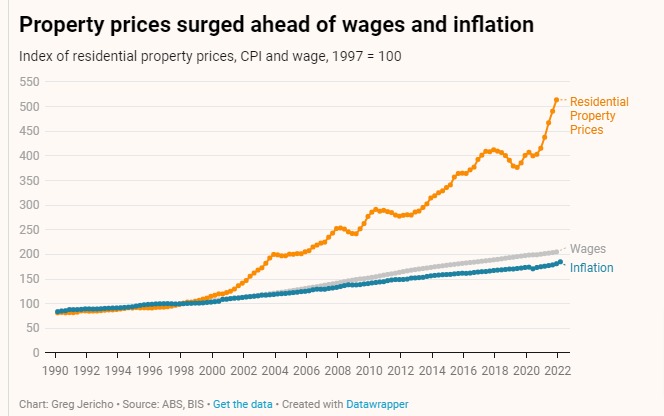
    The problem is that for many decades, housing policies have overwhelmingly been geared toward increasing demand within the private-sector housing market. This has only served to pump prices and make it harder for first-home buyers to enter the market, and also increasing the age that people are buying their first home.

    Policy Director, Greg Jericho, writes in a column for Guardian Australia, that we need to instead focus on the supply side – increasing the stock of housing – and we also need to be bold enough to look outside the typical private-sector model.

    The Australia Institute’s Nordic Policy Centre has proposed a number of measures that have been pursued in Norway, Sweden and Finland that show the solution to housing affordability is not about creating tax distortions that benefit homeowners or which serve only to transfer money from low-income people to the wealthy, but instead treats housing as a need rather than just a wealth-building asset.

    After decades of failure, the solution to housing affordability needs to be something other than more policies designed to lift housing prices.

    The post To really address housing affordability we need to think differently appeared first on The Australia Institute's Centre for Future Work.

  • Rate rises are going to cause a housing affordability crunch

    But that is about to change.

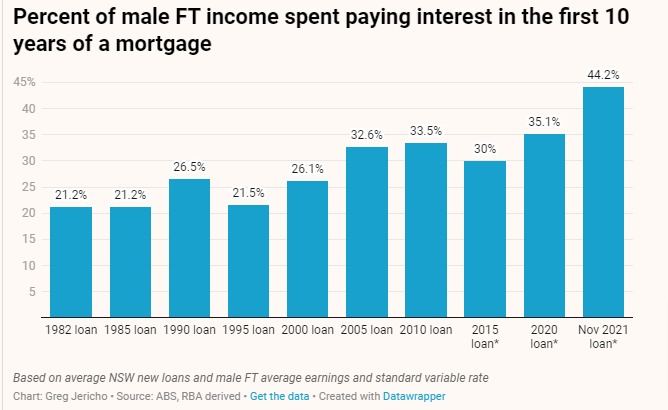
    The signal that interest rates are going to rise by possibly 2.5% points over the next 18 months means that for new mortgage holders the cost of repaying a mortgage is going to be harder than ever before – harder even than when interest rates hit 17% in 1990.

    It is a hit that will only exacerbate standard of living problems as wages will struggle to keep up with the rising cost of of holding a mortgage – especially given the belief that wage rises need to be contained below inflation rises continues in economic debate.

    The post Rate rises are going to cause a housing affordability crunch appeared first on The Australia Institute's Centre for Future Work.

  • Free Undergraduate Education to Save Universities and Jobs: Report

    The next federal government can save universities, make undergraduate education free for all Australians and employ tens of thousands of staff securely by lifting the public spend on higher education to just one per cent of GDP, according to a landmark new report.

    The Australia Institute’s Centre For Future Work report shows, if the federal government brings its annual investment in higher education into line with the OECD average, we could fix the destruction inflicted by the COVID pandemic and make universities more accessible and affordable for all Australians.

    Following decades of funding cuts, government inaction and the pandemic, more than 40,000 jobs were lost in public tertiary education in the 12 months to May 2021, 35,000 of those at public universities.

    National Tertiary Education Union (NTEU) National President Dr Alison Barnes said “Higher education needs to be made a priority in this election. The future of hundreds of thousands of staff and millions of students depends on it.

    “The state of the sector now is deeply concerning. It is the consequence of the Morrison Government’s decision to exclude universities from JobKeeper, hike student fees, cut funding per student place, entrench casualisation and decimate curiosity-driven research funding.

    “Thousands of jobs have been lost at public universities and the staff who are left are being kept on casual or short-term contracts. Those staff can’t plan for their future and often have their pay stolen by money-hungry universities who have built their business models on wage theft and insecure work.

    “The next Australian Government could remove the financial barrier to higher education, employ more than 26,000 staff in secure full-time jobs, restore research funding, reduce the over-reliance on casual staff and establish a new higher education agency to improve governance.

    “Free undergraduate education would be transformative for current and future students who are now facing more expensive degrees, mounting student debt and even the threat of being kicked off HECS if they don’t pass their courses.”

    Australia Institute economist and the report’s author Eliza Littleton said “As devastating as the pandemic has been for Australia’s universities, the sector was being distorted and damaged by corporatisation, casualisation, and privatisation long before COVID arrived.

    “Australia needs an ambitious national vision for higher education that re-aligns the sector with its public service mission, and with the needs of students, staff, and wider society.

    “Australia can choose a future for higher education that facilitates a stronger economy, social mobility and enhanced democracy – all the while generating a source of high-quality careers for many thousands of Australians.”

    The report’s recommendations include:

    • Free undergraduate education for Australian students
    • Adequate public funding for universities
    • Fully-funded research
    • Measures to ensure secure employment
    • Improved higher education governance
    • Caps on vice-chancellor salaries; and
    • Transparency in data collection.

    The post Free Undergraduate Education to Save Universities and Jobs: Report appeared first on The Australia Institute's Centre for Future Work.

  • House prices means interest rates do not need to rise much to inflict great costs

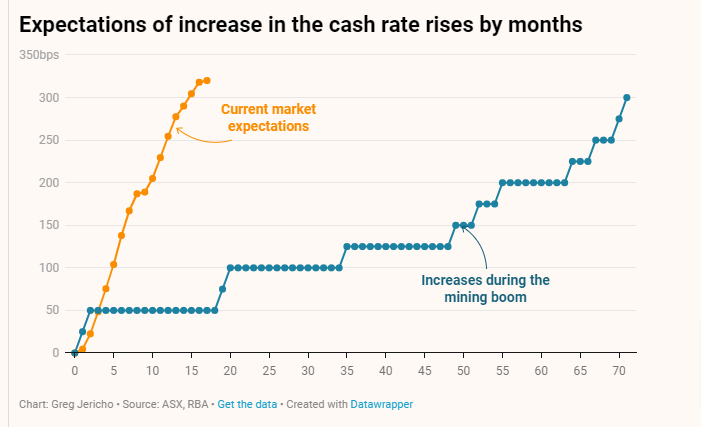
    But while that may have been a neutral rate in the past, the Centre’s Fiscal and Labour Market Policy Director Greg Jericho, notes in his column in Guardian Australia, recent surges in house prices means such a rise would place an extreme burdon on mortgage payers – one not conducive to an economy still in recovery. 

    It took nearly 6 years during the mining boom for the RBA to raise the cash rate by 300 basis points; currently the market anticipates the same rise occurring in 17 months.

    That would massively limit economic growth for little purpose at a time when wage rises remains below inflation, and rather unlikely to occur given the Reserve Bank’s recent hesitancy to slow the economy until real wage again start rising.

    The post House prices means interest rates do not need to rise much to inflict great costs appeared first on The Australia Institute's Centre for Future Work.

  • A slap-dash budget revealing a government with no idea why it is in power

    But as Fiscal and Labour Market Policy Director, Greg Jericho notes in his Guardian Australia column, the slap-dash and short-term nature of the measures reveals this government has lost any real reason for governing.

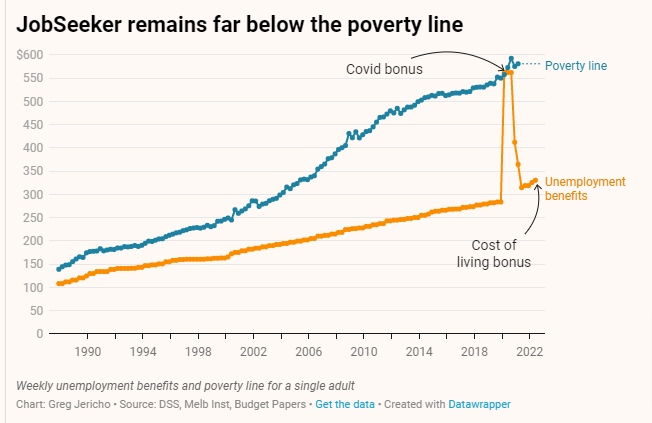
    From the extra bonus of the low-middle income tax offset with no taper, which is now being used by businesses to argue against raising the minimum wage and the relative lack of concern about those in poverty while trying to exist on JobSeeker, this budget has all the hallmarks of an effort made up at the last minute and where poll numbers were more important than any economic figures.

    The post A slap-dash budget revealing a government with no idea why it is in power appeared first on The Australia Institute's Centre for Future Work.

  • Flat wages and booming house prices cause housing affordability to plunge

    A decade ago the medium-priced house in Sydney was equivalent to 5.8 times the annual income of a median household; now it is 10.8 times that income. 

    Greg Jericho examines the issue in his column in Guardian Australia and drills down to look at the affordability of housing across the nation and finds a shocking, yet unsurprising tale – and one that deserves a much greater focus in the coming election campaign than is currently the case 

    https://www.datawrapper.de/_/GmaeJ/

    The post Flat wages and booming house prices cause housing affordability to plunge appeared first on The Australia Institute's Centre for Future Work.

  • Australia ready to become sustainable EV-making powerhouse: new research

    The new report, Rebuilding Vehicle Manufacturing in Australia: Industrial Opportunities in an Electrified Future, has found Australia is uniquely blessed with advantages to attract and retain EV manufacturing and rebuild the nation’s car-making capacity. This potential, however, will not be met without major government action.

    “When it comes to creating an EV manufacturing sector, Australia enjoys advantages other nations would die for: rich reserves of lithium and rare earths, strong industrial infrastructure, a highly skilled workforce, powerful training capacity, abundant renewable energy options, and untapped consumer potential,” said Dr Mark Dean, the report’s lead author.

    “And contrary to popular belief, we wouldn’t be starting from scratch. Thanks to the resilience of our remaining automotive manufacturing supply chain, a surprising amount of auto manufacturing work – including components, specialty vehicles, and engineering – still exists here.”

    But Dr Dean said his research found Australia’s advantages would count for little without significant government support. The report makes a number of recommendations including:

    • Establishing an EV Manufacturing Industry Commission
    • Using tax incentives to encourage firms involved in the extraction of key minerals – primarily lithium and rare earths – with local manufacturing capabilities, especially emerging Australian EV battery industries
    • Introducing a long-term strategy for vocational training, ensuring the establishment of skills to service major EV manufacturers looking to set up operations Australia
    • Offering major global manufacturers incentives (tax incentives, access to infrastructure, potential public capital participation, etc) to global manufacturers to set up – especially in Australian regions undergoing transition from carbon-intensive industries
    • Introducing local procurement laws for the rapid electrification of government vehicle fleets

    “No nation builds a major industry without its government taking a proactive role. Our new research shows there’s no excuse for inaction, because there are a huge range of powerful levers our government could be pulling,” Dr Dean said.

    “If we capture the moment we’ll capture abundant benefits: creating tens of thousands of regional manufacturing jobs, reducing our dependence on raw resource extraction, reinforcing our accelerating transition toward non-polluting energy sources, and spurring innovation, research, and engineering activity in Australia. We just need our government to act.”

    The post Australia ready to become sustainable EV-making powerhouse: new research appeared first on The Australia Institute's Centre for Future Work.

  • Migrant Workers Abandoned in the COVID Recovery

    In this short, accessible commentary, Senior Economist Alison Pennington outlines how the pandemic, the resulting recession and government COVID-era policies have increased risks to migrant workers’ financial security, and health and safety. Building more secure, inclusive labour markets can reduce risks that future major events don’t hit the most vulnerable hardest.

    This commentary was prepared for presentation to the Migrant Workers Centre Conference, November 2020.

    Migrant Workers & The COVID-19 Recession

    by Alison Pennington, Senior Economist at Centre for Future Work

    COVID infections continue to sweep Europe and the US while Australia celebrates multiple days without any cases of community transmission. But Australia’s public health success has not come without significant economic and social hardship for large sections of our community – especially migrant workers. Thousands of migrant workers were pulled off the job to stop the spread of COVID-19, and excluded from key government income support programs including JobSeeker and JobKeeper. Temporary migrant workers are still left without access to Medicare.

    As the economy slowly recovers from recession, migrant workers will face even greater hardship in accessing decent jobs and incomes. The expiration of temporary work visas without supports to reconnect with new employers, and in jobs that pay enough, will expose migrant workers to more intense exploitation.

    The federal government’s response to the unprecedented COVID-19 economic crisis has included big spending on tax cuts, subsidies and other business concessions as part of its “business-led recovery”. But there are many problems with how the government thinks about the economy, that will mean the economic crisis will be longer and more painful than it needs to be.

    The pandemic has left deep cuts in the economy: two million people (15% of labour force) are either unemployed, working far fewer hours than normal, or have left the labour market all together since the March lockdowns; consumer spending has not fully recovered after lockdown restrictions were lifted and people prefer to save in preparation for harder times. Companies are focused on recovering or maintaining profits, cutting investments in their businesses, and cutting spending on employment and wages. Private investments have been decreasing for years and will not miraculously rebound during a recession. Trusting the private sector to lead our post-COVID economic recovery therefore is like hoping for a miracle.

    Income tax cuts are mainly symbolic and do not have real and lasting impacts on boosting spending in the economy. In fact, normal pay rises are far more effective than tax cuts because the effect of wage growth is permanent and cumulative. The announced tax cuts are also unfairly designed to benefit high-income earners. 88 per cent of the combined permanent benefit of the tax cuts will go to highest-fifth of income earners whereas low- and middle-income earners will get only a one-time rebate of $1,080 at the next tax return.

    Wage growth is expected to stay at 1.25 per cent in 2021 – enough only to match the slow rise in consumer prices. But a higher unemployment rate and continued increase in part-time and casual jobs will cut household incomes even more. If the government adopted measures to strengthen wages including higher minimum wages and stronger collective bargaining rights, our recovery would be on a better track.

    Youth, women, migrant workers and long-term unemployed are in most need of targeted job-creation policies. But the federal government has presented no plan to create jobs for the millions of unemployed, underemployed and disenfranchised who want and need paid work. The JobMaker program provides a subsidy for 12 months to employers creating new jobs for young workers on unemployment payments. It is a short-sighted initiative that will not reach its intended claim of creating 450,000 jobs (Treasury estimate now 45,000). There is no guarantee young workers will maintain employment once the government stops paying for the subsidy. Without job protections, the program will encourage the “churning” of vulnerable young workers in low-wage, insecure jobs. It could also displace existing workers and discourage the hiring of others. Migrant workers have already experienced mass redundancies when employers chose to engage workers who qualified for the JobKeeper subsidy. Migrant worker displacement may occur under JobMaker.

    Despite Australia’s macroeconomic weakness, the government intends to decrease spending by billions in cuts to the JobKeeper and Coronavirus Supplement payments in March 2021. The impacts on the jobs and incomes of low and middle-income workers will be disastrous. The real way to overcome the recession will be to restore the capacity of people to work, earn and be healthy, engaged members of a more inclusive Australian economy. This can be achieved only when the government commits to a long-term, ambitious vision for economic and social change, backed by substantial and sustained public spending. This vision should create more secure jobs, invest in climate-friendly industries, and strengthen and expand our public services like healthcare, education and skills.

    Rather than wait for private sector investment, the federal and state governments can expand direct public sector employment now. They can also ensure all people residing in Australia are protected from poverty and insecurity now. Urgent measures should be taken immediately to address the pronounced risks to migrant workers’ financial security, and health and safety experienced during this crisis:

    • Expand JobSeeker and the Coronavirus Supplement coverage to excluded migrant workers. Reverse the punitive and economically counterintuitive cuts to the Coronavirus Supplement, and permanently restore the $550 per fortnight rate.
    • Expand JobKeeper coverage to all workers, and end the two-tiered wage subsidy scheme, returning the original $1,500 flat payment rate permanently.
    • Create a paid sick leave scheme available to all workers, regardless of their work status.

    The pandemic has shone a light on the growing scourge of insecure work. Around half of all employment in Australia has one or more dimensions of precarity including casual, temporary, part-time insufficient-hours work, and self-employment. Precarious work contributed to the community spread of disease, such as in the private aged care system where widespread practices of multiple jobholding led to virus transmission between facilities.

    We have worked together to eradicate COVID-19, and we can work together to eradicate insecure work. Working to build more secure labour markets for all is about reducing risks that major events don’t hit the most vulnerable hardest. Job creating investment, quality public education and skills systems, income supports for all, and extending minimum labour standards like Award wages and collective bargaining are critical to an inclusive post-COVID recovery. And by strengthening the collective efforts of workers to take action in their unions, we can put good jobs and incomes in the driving seat of Australia’s economic recovery.

    The post Migrant Workers Abandoned in the COVID Recovery appeared first on The Australia Institute's Centre for Future Work.
  • Paid Parental Leave for Fathers Advances Parental Equality

    In this commentary, Centre for Future Work Economist Alison Pennington reports on a timely roundtable discussion held with work/care policy experts on Iceland’s “father’s quota” parental leave system, and the future for paid parental leave in Australia – co-hosted with the Nordic Policy Centre.

    Research presented by leading Icelandic academic Dr. Ásdís Aðalbjörg Arnalds on the day shows that paid parental leave for both parents at wage replacement levels is key to building more equal workplaces, families and communities, and a modern dual work/care model.

    The post Paid Parental Leave for Fathers Advances Parental Equality appeared first on The Australia Institute's Centre for Future Work.
  • ABCC will do nothing for housing prices: Report

    Prime Minister Turnbull blamed construction workers and their union for the high cost of housing, when he re-introduced the ABCC bill in Parliament last month, claiming the bill would help “young Australian couples that can’t afford to buy a house because their costs are being pushed up by union thuggery.”

    But new research from the Centre for Future Work shows there is no statistical correlation between construction unionization or construction wages, and the soaring cost of housing.

    “The government’s claim that construction labour costs explain the rising price of housing has no basis in evidence,” Director of the Centre for Future Work, Jim Stanford said.

    “The suggestion that restricting union activity in construction can somehow deflate the great Australian property bubble reveals a critical misunderstanding of the Australian housing market.”

    The study provides detailed statistics regarding housing prices, union membership, wage growth, total construction costs, and replacement building costs. The report finds that:

    • Construction wages have grown more slowly than the Australian average over the last five years.
    • Real wage gains in construction have been slower than real productivity growth, and hence real unit labour costs in construction have declined.
    • Construction labour accounts for only 17-22 percent of the total costs of new building.
    • Construction costs, in turn, account for less than half the market value of residential property.
    • Construction labour costs correspond to less than 10 percent of housing prices (and even less than that in Australia’s biggest cities).
    • Construction labour accounts for about the same proportion of a house purchase as real estate commissions and stamp duty.

    “Homes in Australia are fast becoming unaffordable, even for the workers who build them. On average, a construction worker now needs 9.2 years of pre-tax earnings to purchase a median home – up 25 percent from just four years ago.

    “If the government is genuine in its desire to make housing more affordable in Australia, it should turn its attention to the real causes of the problem. Better policy responses would include measures to cool off property speculation, more carefully regulate the banking sector, and reform property-related taxes,” Dr Stanford said.

    The post ABCC will do nothing for housing prices: Report appeared first on The Australia Institute's Centre for Future Work.