Tag: Employment & Unemployment

  • Victorian Inquiry Offers Novel Routes to Regulating Gig Work

    This commentary outlines the key findings of the On-Demand Inquiry.

    Victorian Inquiry Offers Novel Routes to Regulating Gig Work

    Findings from a landmark inquiry commissioned by the Victorian government into the work conditions in the “on demand” (gig) economy have been released. The Inquiry confirms workplace laws have failed to keep pace with economic change.

    Release of the report’s findings are timely with COVID-era unemployment surging and an expanding pool of vulnerable workers relying on “gig” work to meet living costs. How do platform “digital sweatshops” work?

    Platform business models recruit workers without access to secure and better compensated jobs (especially migrant and young workers). Jobs performed are often menial and without adequate safety protections. Gig workers lack stable work schedules or incomes, and receive wages that often fall well-below social norms and legal minimums.

    The major recommendations by the Inquiry chaired by former Fair Work Ombudsman Natalie James include:

    • A more systematic application of the “work test” currently used to classify workers as employees or independent contractors by codifying the test in the Fair Work Act (rather than common law). This would create a nationally coherent framework for extending protections including minimum pay and conditions to gig workers genuinely working for another’s business.
    • Alter competition laws and establish a new industry Award to enable gig workers to bargain collectively with platforms.
    • Strengthen the gig work regulatory regime through industry codes of conduct between platforms, governments and unions for non-employee gig workers, overseen by the Australian Competition and Consumer Commission, and allow an independent tribunal to oversee work status determinations.

    We commend the Inquiry on the ambitious scale of the investigation, and the innovative pathway proposed for gig work regulation.

    Three Centre for Future Work reports on gig work in Australia were cited in the final report. Research by Director Jim Stanford (with Andrew Stewart from University of Adelaide) featured in the report’s major recommendation that collective bargaining rights be extended to gig workers to lift pay and conditions of gig work.

    Read our full submission to the Inquiry — Turning Gigs Into Decent Jobs — by Jim Stanford and Alison Pennington.

    The post Victorian Inquiry Offers Novel Routes to Regulating Gig Work appeared first on The Australia Institute's Centre for Future Work.
  • 81% of Australians support JobKeeper for all Casual Workers

    More than eight in ten Australians support extending JobKeeper to all casual workers.

  • Webinar: Protecting Jobs and Incomes During the Pandemic

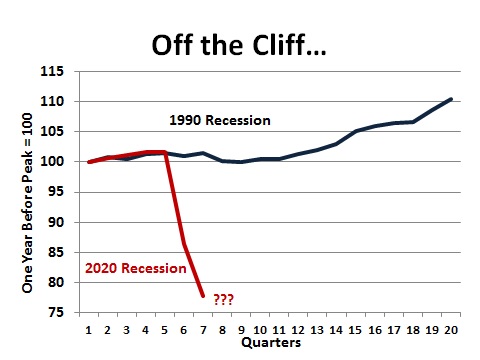
    Jim titled his presentation “Off the Cliff”, highlighting that the immediate shutdown of so much of Australia’s work and production is producing an economic contraction unlike anything experienced in history.

    Comparing Recessions

    Watch a video recording of the webinar:

    And/or download Jim’s slides below.

    This webinar was part of the Australia Institute’s weekly pandemic webinar series.

    The post Webinar: Protecting Jobs and Incomes During the Pandemic appeared first on The Australia Institute's Centre for Future Work.

  • Open Letter From Economists and Policy Experts: Wage Subsidy to Protect Jobs During Pandemic

    The letter and the full list of signatories is reprinted below. It has been forwarded to Prime Minister Morrison.

    Public Statement from Economists and Public Policy Experts:

    A Wage Subsidy to Protect Jobs During the Coronavirus Shutdown

    The unprecedented public health measures required to deal with the COVID-19 pandemic are causing a dramatic shutdown of work and production in several key sectors of Australia’s economy. Immediate full or partial closures of activity are occurring in several consumer-facing industries (such as hospitality, retail, airlines, recreation and personal services). But before long, spillover losses will be experienced in other sectors, too: including wholesale trade and logistics, manufacturing, business services, education, and others. Consumer and business confidence has been deeply shocked, and that will magnify the negative economic effects of the pandemic.

    The coming recession will be unprecedented in Australian history – in both its speed and its depth. Without immediate action, we expect that 1-2 million workers, or even more, could lose their jobs in coming weeks. That would drive unemployment to 15% or higher, overwhelm income support programs, and leave hundreds of thousands of businesses unable to function – even after the immediate health danger passes.

    This is a dangerous and dramatic moment in Australia’s economic history. It is imperative that the federal and state governments act immediately and powerfully to protect Australian workers and businesses from the worst of the coming downturn. Important steps have been taken to expand access and benefit levels for income support payments to Australian workers (including casuals, contractors, and gig workers) losing work because of the pandemic. This is a helpful, but on its own inadequate, response. Government must also act forcefully to prevent mass job losses in coming weeks – not just provide support to those who do lose work.

    In this regard, we recommend that the Commonwealth government immediately implement a large-scale wage subsidy scheme, similar to those already enacted in several other industrial countries (including, variously, the UK, Denmark, New Zealand, the Netherlands, South Korea, and Ireland). Under these programs, government directly pays to employers (for a limited period of time) a majority portion of wages (between 70 and 90%) to cover the wages of workers who would otherwise be stood down from their positions. The measure can apply to non-standard workers (including contractors and self-employed). It can also be integrated with measures to support short time working as an alternative to complete redundancy. The wage subsidy is paid to firms experiencing severe losses of revenue and business (beyond a specified threshold). It would cover most of the wage bills for workers who can no longer work for economic reasons, up to a specified ceiling (perhaps the level of full-time median earnings). This program will be expensive – but governments everywhere have recognised that this unprecedented crisis requires them to do everything in their power to protect people, jobs, communities and the economy.

    To date, Australia’s response to the pandemic has been uncertain, inconsistent and inadequate. Immediate, powerful action to keep millions of Australians in their jobs, instead of pushing them into an overloaded and complex Centrelink system, would significantly ease the pandemic’s painful economic effects. It would underpin financial stability for millions of households through the coming terrible weeks or months. And it would preserve the viability of hundreds of thousands of Australian businesses, allowing them to resume work and production as soon as the health restrictions are eased.

    We the undersigned support the proposal for a strong wage subsidy program to keep workers in employment through the coming downturn, and we urge the Commonwealth government to implement such a policy quickly.

    Download full list of signatories below.

    The post Open Letter From Economists and Policy Experts: Wage Subsidy to Protect Jobs During Pandemic appeared first on The Australia Institute's Centre for Future Work.

  • Gender Inequality in Australia’s Labour Market: A Factbook

    The factbook compiles evidence on over 60 different statistical indicators of gender inequality in Australia, organised into 18 different subject groupings. It paints a composite picture of how women are blocked from full participation in work and economic activity, experience greater precarity in employment, are paid less for their efforts, and experience other forms of exploitation (including violence and sexual assault in workplaces).

    Some of its more startling findings include:

    • The true wage gap between women and men is much larger than often reported. The commonly-cited gender wage gap of 14% only applies to women working in full-time positions, and excludes bonuses and overtime payments. However, women have less access to full-time jobs, and receive far less bonus and supplementary income than men. The gender gap in total wage income is 32% – more than twice as wide.
    • Women are much more subject to precarious and insecure work arrangements than men. They are far more likely to be employed in part-time, casual, and temporary positions than men. Only 43% of employed Australian women work in a traditional full-time permanent job with normal entitlements (such as paid sick leave, holidays, and superannuation). The rest all experience one or more dimensions of precarity in their jobs. That compares to 57% of men in permanent full-time jobs with entitlements.
    • Women who undertake self-employment are especially vulnerable. The report shows that 47% of self-employed women are in vulnerable business positions: working part-time, and working either without incorporation or without any other employees (or both). That compares to 19.% of self-employed men.
    • Women are now more likely to be members of a union than men, and make up more than half of union members. Women who are in a union earn 29% more per week than women who are not in a union. For part-time workers, the union advantage is even bigger: women union members earn 44% more than non-members

    “The statistical evidence is overwhelming that women are a long way from achieving equality in Australia’s workplaces,” said Alison Pennington, Senior Economist at the Centre for Future Work and co-author of the factbook.

    “These systemic and structural barriers to full participation and fair compensation are holding Australian women back and our economy is weaker for it.

    “Australian women need to be able to work and earn to their full potential. This requires powerful measures to support women workers in all aspects of their lives; from quality affordable childcare to much stronger protections against violence and sexual harassment.”

    The post Gender Inequality in Australia’s Labour Market: A Factbook appeared first on The Australia Institute's Centre for Future Work.

  • Meet the New Boss, Same as the Old Boss

    Stanford highlights seven ways in which the nature of work and employment is demonstrating a fundamental continuity, despite changes in technology and work organisation: ranging from the predominance of wage labour in the economy, to employers’ continuing interest in extracting maximum labour effort for the least possible labour cost.

    “I have started to conclude there is more constancy than change in the world of work. In particular, the central power relationships that shape employment in a capitalist economy are not fundamentally changing: to the contrary, they are being reinforced… As a result, I suspect the future of work will look a lot like its past, at least as it has existed over the past two centuries. Where work is concerned, it is truly a case of ‘back to the future.’”

    Stanford rejects the common assumption that changes in employment relationships (such as the rise of “gig” jobs, and other forms of precarious work) are driven primarily by technology–stressing instead the importance of discrete choices within enterprises and society as a whole about what kinds of technology are developed, and how they are implemented. Improvements in work are certainly possible, but only when workers are able to exert active, organised pressure on employers and governments.

    Please read Stanford’s full commentary, Meet the New Boss, Same as the Old Boss (‘Who’ soundtrack optional!).

    The post Meet the New Boss, Same as the Old Boss appeared first on The Australia Institute's Centre for Future Work.

  • Go Home on Time Day 2019: Australian Employers Pocketing $81 Billion Worth of Unpaid Overtime

    The Centre’s 11th annual ‘Go Home on Time Day’ report also reveals the growing polarisation of working hours, between Australians who have too much work and others who can’t get enough. While 21 percent of Australians in full-time employment are working more than they want to, 48 percent of part-time workers and 64 percent of casual workers want to work more hours.

    “There is an epidemic of time theft in Australia right now and it is costing workers tens of billions of dollars, each and every year,” said Bill Browne, researcher at The Australia Institute and author of the report.

    Each November, the Centre urges Australians to appreciate the value of their legitimate time off by leaving their jobs at the end of their paid workday.

    “Today is the day we ask all Australian workers to go home on time. We need to put limits on our work – and push back against the increasingly common expectation among employers that we should stay late for free.

    “Our research has shown that employees are regularly staying late, coming in early, working through their lunch or other breaks, taking work home on evenings and weekends or being contacted to perform work out of hours.

    “Most Australians wouldn’t dream of working for 6 weeks without pay, but that is happening every single year in the average Australian job.

    The Centre’s 2019 ‘Go Home on Time Day’ survey indicated that even part-time and casual workers, most of whom want more paid hours of work each week, are still being asked to work unpaid overtime.

    “At the same time as many Australian workers report they would prefer more hours of paid work, unpaid overtime is an all too frequent occurrence,” Browne said.

    “In an era of wage stagnation, underemployment, insecure work and significant cost of living pressures, Australian workers cannot afford to give their time away to employers for free.

    “To end the epidemic of time theft, regulators must enforce existing rules regarding maximum hours of work on a more consistent basis, and provide workers with more choice to refuse overtime and work shorter hours. Workers, either individually or through their unions, must also demand that employers respect their right to leisure time – for their own benefit, and for the good of Australian society.”

    The post ‘Go Home on Time Day’ 2019: Australian Employers Pocketing $81 Billion Worth of Unpaid Overtime, Report Reveals appeared first on The Australia Institute's Centre for Future Work.

  • Chronic Unemployment a Consequence of Deliberate Economic Policies

    New research from the Centre for Future Work shows that there is no statistical evidence for the long-held assumption that if unemployment falls below its so-called “natural” or non-accelerating inflation rate (the NAIRU)—currently thought to be around 5% unemployment—that inflation and wages will grow uncontrollably. The report concludes that Australia’s controversial NAIRU concept and it’s use in economic policy should be abandoned.

    Key Findings:

    • Australian macroeconomic policy maintains elevated unemployment in order to restrain wage growth and inflation, this is known as the non-accelerating inflation rate of unemployment (NAIRU).
    • There are around 3 million Australians who would like to work, or more work, but can’t: that’s more than four times higher than the official unemployment estimate.
    • The economic benefits of reducing unemployment are enormous. Every one-percentage point reduction in unemployment results in 134,000 new jobs, $10 billion in additional output, and billions of dollars in revenue for governments.
    • Monetary and fiscal policy should aim to steadily reduce unemployment to as low as possible, rather than targeting a certain minimum unemployment rate.

    “In Australia, we blame the unemployed for their supposed lack of skills and motivation but at the same time, use macroeconomic policy to stop unemployment getting ‘too low’ – it’s an enormous contradiction,” says David Richardson, senior research fellow at The Australia Institute.

    “Record-low wages growth, and Australia’s generally sluggish economic performance, make the need for a change in policy direction all the more urgent.

    “It is time for a fundamental rethink of Australian macroeconomic policy, which should instead be focused on restoring genuine full employment as the top priority.

    “Since chronic unemployment is the outcome of deliberate policy, the least society can do is fairly compensate those who have been hurt by this policy – raising Newstart would be a start.”

    The post Chronic Unemployment a Consequence of Deliberate Economic Policies appeared first on The Australia Institute's Centre for Future Work.

  • Young Workers are Shock Troops of Precarious Labour Market

    The National Youth Commission into Youth Employment and Transitions has been holding an inquiry in communities across Australia to document the situation of young workers, who are experiencing much lower rates of employment and income than other workers.

    Stanford’s submission argued that young workers are like the “shock troops” of the precarious labour market: the ones sent in first to confront an especially dangerous situation. The rise of precarious work in all its forms – part-time work, casual jobs, labour hire, temporary positions, marginal self-employment, and digitally mediated ‘gigs’ – now dominates youth employment patterns. And that situation will not automatically disappear as young workers get older and gain experience. Rather, evidence suggests that without policy measures to stabilise and improve jobs, this will be a permanent shift that gradually affects most workers. Already, less than half of employed Australians are working in a ‘traditional’ full-time permanent wages jobs with normal entitlements (like paid holidays, sick leave, and superannuation). For young workers, that ratio is less than one in five.

    Stanford argued for targeted measures to stimulate more youth hiring into stable positions, an ambitious effort to rebuild vocational education in Australia and strengthen pipelines to post-education jobs, and a broader commitment to full-employment macroeconomic policy.

    The post Young Workers are “Shock Troops” of Precarious Labour Market appeared first on The Australia Institute's Centre for Future Work.

  • Precarity and Job Instability on the Frontlines of NDIS Support Work

    In this new report, researchers document the experience of front-line disability service workers under the NDIS based on first-hand qualitative interviews.

    The report was a joint initiative of two leading academic researchers (Prof. Donna Baines, formerly of the University of Sydney, and Dr. Fiona Macdonald of RMIT) and the Centre for Future Work. Researchers conducted detailed face-to-face interviews with 19 front-line disability service workers, mostly in the Newcastle, NSW region. (Newcastle was one of the locations chosen for NDIS trials, so workers in the region have more experience with the reality of NDIS delivery problems.)

    The interviews indicated 8 major problems negatively affecting the stability, quality and sustainability of work for disability support workers:

    1. The new system is not providing sufficient support for participants with intellectual and other cognitive disabilities, including in designing and managing individual programs of care;
    2. DSWs are experiencing increased instability and precarity in their jobs, elevated levels of mental and physical stress, and irregular hours and incomes;
    3. New workers joining the disability services sector are often less skilled, less trained, less experienced, and sometimes reluctant;
    4. DSWs experience particular challenges working in the private realm of NDIS clients’ homes;
    5. The informal and inconsistent provision of transportation and other necessary functions to NDIS clients results in a significant shift of costs and risks to workers;
    6. DSWs are experiencing increased levels of violence in their work;
    7. Relationships with managers have changed dramatically under the new system, undermining effective supervision, coaching, and training; and
    8. Worker turnover, given the insecurity of work and income and the challenging conditions of work, is extreme.

    The deterioration in job stability and working conditions under the NDIS will inevitably impact on the quality of service experienced by NDIS clients; it will also exacerbate the overarching challenge of recruitment and retention facing disability service providers as they try to attract the 80,000 new full-time equivalent workers required to operate the scaled-up NDIS.

    The researchers conclude with several policy recommendations to improve the quality and stability of work for disability support workers, and the quality of care for participants.

    The post Precarity and Job Instability on the Frontlines of NDIS Support Work appeared first on The Australia Institute's Centre for Future Work.