Tag: Economics

  • Video: Myth & Reality About Technology, Skills & Jobs

    But what if technology isn’t all it’s cracked up to be? And what if you invest in learning the current hot coding language, only to see it replaced by something totally different as soon as you graduate?

    In this 30-minute video, Centre for Future Work Economist and Director Dr. Jim Stanford takes on several myths related to technology and jobs.

    He argues that technology is neither exogenous nor neutral: innovation reflects the priorities (and the power) of those who have the resources to pay for it. By some indicators, jobs are becoming less technology-intensive — and this is undermining job security and living standards. Finally, we need a more holistic and democratic approach to skills and training: one that respects the all-round interests of workers as human beings (not just ‘producers’), and accepts that skills alone are no guarantee of decent, fair jobs in the future.

    The video is an excellent, free resource for adult education workshops, career development courses, and union meetings.

    The post Video: Myth & Reality About Technology, Skills & Jobs appeared first on The Australia Institute's Centre for Future Work.

  • Budget Analysis 2021-22: Heroic Assumptions and Half Measures

    While an abrupt turn to austerity was avoided in this budget, overall program spending is nevertheless declining substantially: falling $60 billion this year (or around 3% of Australia’s GDP) as COVID support programs are eliminated. And the new investments announced in some programs neither offset the contractionary impact of overall spending cuts, nor come close to meeting the real need for expanded services in any of these areas.

    Our briefing paper on the 2021-22 Commonwealth Budget describes the contradictory macroeconomic logic of the budget, and the risks of an economic recovery that is overwhelmingly dependent on consumer spending – at a time when consumer incomes are constrained by stagnant wages and cutbacks in income programs. It also reviews specific spending announcements in several key areas of relevance to workers and labour markets: including aged care, gender inequality, superannuation, manufacturing, and higher education.

    This budget was an opportunity for the government to recognise that a sustained recovery needs a balanced and inclusive economic and fiscal approach. Full recovery can only be underpinned by a commitment to more secure jobs, higher wages, expanded public services, and a broad portfolio of high-value industries. Sadly, the budget fails to deliver on all these counts. The government has not truly accepted its responsibility to oversee a lasting and inclusive reconstruction after the terrible events of the last year.

    The post Budget Analysis 2021-22: Heroic Assumptions and Half Measures appeared first on The Australia Institute's Centre for Future Work.

  • New Research: Commonwealth Can Afford $10b for Aged Care Recommendations

    Implementing the recommendations of the Royal Commission into Aged Care Quality and Safety will require additional Commonwealth funding of at least $10 billion per year, and there are several revenue tools which the government could use to raise those funds, according to a new report on funding high-quality aged care released by the Australia Institute’s Centre for Future Work.

    Key Findings:

    • While the Royal Commission’s 148 recommendations were not explicitly costed, the Centre for Future Work report shows that $10 billion per year (approximately 0.5% of Australia’s GDP) would be the minimum required to move forward with the urgent reforms in regulation, employment practices, and quality benchmarks advised by the Commission.
    • Australia’s public spending on aged care is much lower than other industrial countries with better records of aged care service. It also notes that Australia’s overall tax collections are also much smaller (by about 5% of GDP) than the OECD average, and have declined relative to Australia’s GDP in recent years.
    • The report recommends that initial improvements in aged care funding should proceed immediately. With the Budget projected to incur major deficits for many years (due to the COVVID-19 pandemic and recession), it is neither necessary nor appropriate to fully ‘fund’ incremental aged care spending in the initial and most urgent years of reform.
    • However, as economic and fiscal conditions stabilise, additional revenue sources will be important in underpinning high-quality aged care. The report highlights five specific options for raising additional revenue – two of which were proposed by the respective Royal Commissioners:
      • A 1 percentage-point Medicare-style flat-rate levy (proposed by Royal Commissioner Briggs)
      • A set of modest adjustments to personal income tax rates, preserving the existing progressivity of the system (similar to the proposal of Commissioner Pagone)
      • Cancelling the legislated Stage Three income tax cuts scheduled to begin in 2024 (which deliver most savings to the highest-income households)
      • Reforms in the treatment of capital gains and dividend income in the personal income tax system
      • Reforms to company taxes to eliminate loopholes and raise additional revenues

    “Australia is one of the richest countries in the world. There should be no argument over whether we can afford to provide top-quality, respectful care to the elders who helped build our economy and our society,” said Dr Jim Stanford, Director of the Australia Institute’s Centre for Future Work, and co-author of the report.

    “The government has access to a whole suite of revenue options to support the ambitious and quick implementation of the Royal Commission’s recommendations. That effort must start with the 2021-22 Commonwealth budget.

    “There is no immutable economic or fiscal constraint holding back the government from doing right by Australia’s elders. The only question is whether this government places enough priority on caring for seniors with the quality and dignity they deserve,” Dr Stanford said.

    ANMF members have been calling out the failures in aged care for many years and urging governments to make the changes needed to ensure dignified care for older Australians. Governments have ignored these calls for as many years. This cannot continue. The findings of the Royal Commission into Aged Care Safety and Quality have made this abundantly clear,” said Annie Butler, ANMF Federal Secretary.

    “This research demonstrates both the need for investment in the aged care sector and how it can be achieved leaving the Government with no legitimate excuses for continued inaction.

    “However, there must be appropriate “strings attached” to any increases in funding provided to aged care providers, providers must be made fully and transparently accountable for the use of taxpayers’ money and assure Australians that their money is going directly to quality care for their loved ones.

    “If Australia is to regard itself as a compassionate, decent society the Morrison Government must stop the suffering and neglect of older Australians by acting now,” Ms Butler said.

    “This report explains why aged care workers are left in tears after their shifts,” said Caroyln Smith, United Workers Union Aged Care Director.

    “The $10 billion annual funding shortfall is leading to horrendous human costs in aged care, with older Australians left unsafe and vulnerable, and workers left physically and emotionally exhausted.

    “This report once again underlines that the Federal Government needs to substantially and effectively address the human toll the aged care crisis is taking on older Australians, their families and aged care workers,” Ms Smith said.

    The post New Research: Commonwealth Can Afford $10b for Aged Care Recommendations appeared first on The Australia Institute's Centre for Future Work.

  • Funding High-Quality Aged Care Services (full report)

    The summary is based on a full 80-page research report, Funding Quality Aged Care Services, published in May and written by David Richardson and Jim Stanford.

    The summary report restates the key recommendations from the Royal Commission (including its emphasis on improving working conditions and job stability for aged care workers), highlights the ample fiscal capacity for the Commonwealth government to move ahead with implementing those recommendations, and then considers five specific revenue tools which could generate sufficient resources to pay for needed reforms. The most obvious (and perhaps fairest) would be for the Commonwealth government to cancel the planned ‘Stage 3’ elimination of the 37% personal income tax bracket: a move (already legislated) which would reduce revenues by at least $16 billion per year, but would deliver the vast majority of its ‘savings’ to the richest fifth of society. Surely, committing to the safe and respectful care of older Australians is a more important priority than further supplementing the take-home incomes of very well-off households.

    The post Funding High-Quality Aged Care Services: A Summary appeared first on The Australia Institute's Centre for Future Work.

  • Australia’s Electricity Infrastructure Undermined by $1 Billion Per Year Under Investment

    The resilience of Australia’s electricity infrastructure is being undermined by a chronic pattern of underinvestment in maintenance and upkeep, the result of rent-seeking by private electricity producers and a deeply flawed regulatory system.

    That is the conclusion of a detailed review of empirical and qualitative data on the transmission and distribution system contained in a new report from the Australia Institute.

    Key findings:

    • The electricity grid is facing increasing challenges: including increased severe weather events, bushfires, and the need to reliably integrate new renewable energy generation into the system. But years of underinvestment in capital and maintenance have left the system vulnerable to disruptions, failures, and disasters.
    • The report shows that maintenance and operating costs across the system should be increased by at least $1 billion per year, to match historical levels of real spending per electricity customer.Real per capita operating and maintenance expenditures have been slashed by 28% (in distribution) and 33% (in transmission) compared to 2006 levels.
    • The electricity industry is allocating just 15% of its revenues to capital spending, despite the needs for new capacity and upgrading – down from 25% in 2007.
    • Within this shrunken envelope of operating and maintenance costs, the industry’s focus has shifted away from hands-on upkeep of the grid in favour of managers, sales staff, financial experts, and other overhead functions. There are now 40% more office managers and professionals working in the industry (mostly in finance and sales) than electricians.
    • With this expansion of unproductive corporate bureaucracies, productivity in electricity has performed worse than any other sector in Australia’s economy: real output per hour worked has fallen one-third since 2007. This trend is worsened by chronic underinvestment in hands-on maintenance and upkeep, causing greater vulnerability to outages, accidents, and shut-downs.
    • A perverse pattern of behaviour has emerged in the regulatory system, whereby transmission and distribution companies submit requests for operating expenses which the AER seemingly rolls back – only to have those artificial budgets underspent by the companies, who are allowed to keep some of the savings. This artificial process has padded already-rich profits of energy companies, while ignoring the real needs of the grid for improved equipment and reliability.
    • The statistical analysis in the report is supplemented by evidence gathered from 25 front-line power industry workers, who attest to their personal experiences with underinvestment, poor maintenance, safety hazards, and environmental damage.
    • The report makes 7 recommendations for regulatory reforms that would allocate more resources to the real work of maintaining and upgrading the grid (so it is better prepared for future challenges like climate change and growing renewable generation), while reducing the waste of unproductive financial and speculative activities.

    “The stresses on Australia’s electricity grid are becoming more severe – including climate change, bushfires, and integrating renewable energy. We should be investing more in the quality and safety of the grid, not less. But the combination of energy company greed and deeply flawed regulatory practices is producing systematic underinvestment in this vital piece of electrical infrastructure,” said Dr. Jim Stanford, director of the Australia Institute’s Centre for Future Work.

    “Australia’s fragmented, irrational electricity system has produced soaring prices for consumers, shaky reliability, but soaring profits. It’s time to rethink the fundamental priorities of the regulatory system – starting with channeling more needed investment into the power grid,” Dr Stanford said.

    “Over the past 15 years, high-vis maintenance and transmission workers have been replaced by telemarketers, spin-doctors and banking spivs. This has done nothing for network reliability, but has left us unprepared for the challenge of extreme weather and the incorporation of renewables to our energy supply,” said Michael Wright, Assistant National Secretary of the Electrical Trades Union.

    “Substantial investment is needed to retool for an unpredictable future. Energy generation and distribution is the backbone of industry and jobs and privatisation has simply cost consumers and jobs. Governments must stop inviting private sector financial parasites to feast on our energy system and instead focus on the mammoth task of preparing for climate change,” Mr Wright said.

    The post Australia’s Electricity Infrastructure Undermined by $1 Billion Per Year Under Investment appeared first on The Australia Institute's Centre for Future Work.

  • Missing a Stitch in Time: Electricity Transmission Underinvestment

    Most important, of course, the industry literally keeps the lights on: it provides an essential input, electric energy, without which no other industry could function and the safety and comfort of Australians would be immediatel jeopardised. In this regard, electricity is clearly an essential service: a utility vital to virtually everything else that occurs in the economy and society.

    Given that critical importance, we would assume that investing in the proper capitalisation, modernisation, upgrading and maintenance of this system would be a top priority of economic policy and corporate decision-making. Unfortunately, however, irrational and unintended consequences arising from the business-friendly, market-driven regulatory regime presently governing Australia’s electricity sector have produced exactly the opposite result. A structural pattern of sustained underinvestment in the upkeep and quality of the transmission and distribution grid is jeopardising the safety and reliability of the network – and harming both the people who work in this industry and the customers they serve.

    The present system was established on the assumption that profit-seeking behaviour of private businesses, with appropriate regulatory supervision, will best ensure an efficient allocation of resources, top quality service, and lowest possible prices for consumers. On every one of these grounds, however, the system has failed. Alongside chronic underinvestment in the system’s equipment and reliability, there is abundant evidence of an enormous waste of resources by self-dealing, rent-seeking corporate entities – diverting billions of dollars of expenditure away from necessary upkeep, redirected to ultimately unproductive activities (including overlapping corporate bureaucracies, frenetic selling and re-selling within the industry, and intense financialisation) that have nothing to do with the production and delivery of reliable, affordable energy. The national grid is unable to meet several challenges to its safety and reliability: including its ability to safely withstand extreme heat and severe weather events, and its capacity to adjust to the accelerating roll-out of variable and distributed renewable generation investments. The workforce in the industry has lost jobs and real incomes. And consumers (both residential and industrial) have faced an unprecedented and unjustified inflation of electricity prices.

    To be sure, this privatised, fragmented, and badly regulated industry has been consistently and increasingly profitable for its owners. Given the monopoly power these energy businesses have been granted over a critical piece of public infrastructure, these profits are hardly a surprise. What is surprising (and disappointing), however, is how Australia’s regulatory regime has failed to recognise and respond to these perverse outcomes. Despite growing evidence of deteriorating efficiency and reliability, and the inflation of both prices and profits, regulators continue with a business-as-usual approach to managing the industry. This approach routinely turns back legitimate requests for needed upgrades, modernisation, and maintenance on the system’s real capital base – while turning a blind eye to the rampant waste of resources on unproductive and self-serving corporate functions. Given the increasing pressures associated with climate change, more severe and frequent bushfires, population growth, and the shift to renewable generation, this business-as-usual approach cannot continue.

    A timeless adage reminds us that ‘a stitch in time saves nine.’ Prudent attention to maintaining productive assets in top quality condition, and upgrading capital in line with new technology and evolving best practices, is a hallmark of efficient and successful management. Australia’s electricity industry is controlled by self-seeking private businesses, and a few state-owned corporations directed to act just like them. They are governed by a regulatory system which places far too much faith in the inherent efficiency of private sector actors. Hence the industry is failing to make that stitch in time. Australians will pay the price for the chronic neglect of proper maintenance and upkeep of our electricity system in many ways: through a system that is inefficient, unreliable, cannot meet the challenges of the coming energy revolution, is unduly expensive to consumers, and which in many cases is unsafe for both workers and the public at large.

    This report provides evidence of a pattern of systematic underinvestment in the upkeep and capability of Australia’s electricity grid, drawing on three major sources of data:

    • A project to gather original qualitative data from dozens of power industry workers employed on the front lines of maintaining Australia’s transmission and distribution network. Their personal and professional experience attests to a widespread and sustained pattern of underinvestment and neglect, and provides worrisome details regarding the consequences of that underinvestment for the well-being of workers, communities, and the environment.
    • A review of other research and findings in the public domain (including several government commissions and inquries) regarding the importance of a top-quality, well-maintained electricity grid for our economy and society. These previous studies have also warned that the current system is falling behind in safe and efficient upkeep of its capital assets.
    • A review of available quantitative data – from the Australian Energy Regulator, from the Australian Bureau of Statistics, and from individual companies. This review confirms the steady decline in allocations of real resources to the capitalisation and good operating condition of the transmission and distribution grid. And it documents the erosion of real maintenance and upkeep according to several indicators, alongside evidence of unprecedented inflation in both electricity prices and industry profits.

    The main findings of this comprehensive qualitative and quantitative analysis include the following:

    • First-hand accounts from dozens of electricity sector workers in various roles and all parts of the country confirm the ongoing failure of the current system to allocate adequate resources to pro-active maintenance, upgrades, and safety, with serious consequences for workers, community safety, and the environment.
    • Real spending by the transmission and distribution sectors on operations and maintenance of the grid has been reduced by at least $1 billion per year since 2012.
    • Adjusted for inflation and the expanded base of customers in the network, real operating expenditures per customer have declined by 28-33 per cent since 2006.
    • Even within that contracting overall envelope of spending on maintenance and operations, several indicators confirm a reallocation of resources away from concrete system operation and maintenance, in favour of corporate overhead functions, re-selling, and financial activities.
    • The transmission and distribution system now employs 40 per cent more managers and office-based professionals than electricians.
    • Capital investment, spending on materials and equipment, capitalised own-use activity, and employment of electricians, linespersons, and related specialists have all declined markedly in the past several years.
    • Fundamental measures of efficiency in the industry (including total factor and average labour productivity) have also deteriorated, dragged down by misallocation of resources to corporate and overhead functions.
    • The squeeze on maintenance and upgrading expenses resulting from a combination of AER pressure and corporate profit-seeking has not produced savings for consumers. To the contrary, prices for both residential and industrial users have soared dramatically (almost doubling in real terms) since 2000.
    • High electricity prices have boosted revenues and profits in the industry – which have doubled in nominal terms since 2006, and grown substantially as a share of the industry’s total value-added. The AER’s superficial and ineffective oversight processes have not prevented private energy businesses from profiting through underinvestment in the industry’s asset base, and exploitation of consumers andworkers alike.

    After reviewing this worrisome evidence of systematic underinvestment in the quality and capability of Australia’s electricity grid, the report concludes with seven concrete recommendations to begin repairing and reversing these irrational and destructive outcomes. These include:

    1. AER determinations of allowable capital, upgrading and maintenance investments by regulated businesses should be ascertained on the basis of concrete bottom-up auditing of system capability, reliability and performance, undertaken by independent arms-length technical experts. Regulation of capital and maintenance expenditures needs to be ‘grounded’ in analysis of real-world challenges and constraints facing the system – including assessments of additional requirements arising from climate change and severe weather, risk mitigation (including bushfire prevention and vegetation management), and challenges related to the growth of distributed renewable generation. A broader economic benefit test should be applied to ensure the interests of workers and the community are factored into decision-making around capital investments and upkeep.
    2. Once appropriate levels of system capital and maintenance expenditures have been identified, explicit mechanisms must be established to reflect and recover those costs in regulated electricity prices.
    3. When adverse events (such as severe weather, bushfires, or other occurrences) necessitate capital or repair expenditures above and beyond previously approved regulated levels, provisions for additional cost recovery must also be accessible.
    4. Costing of capital installation, upgrading, and maintenance expenditure must take explicit account of the need for high-quality skilled, certified labour to perform that work – including appropriate wages, entitlements and working conditions in line with industry best practices.
    5. The accelerating transition to renewable energy sources, through both utility- scale projects and distributed sources, poses a unique and historic challenge to the capabilities of the national transmission and distribution grid. The AER, in conjunction with the AEMO and other industry bodies, should undertake a thorough assessment of the investments and system changes that will be required to meet the new requirements of an increasingly renewables-focused power system. This assessment must incorporate a broader economic and social cost-benefit lens, rather than the current narrowly-defined conception of economic costs. The findings of this assessment must then inform the AER’s subsequent determinations regarding allowable capital and maintenance expenditures by regulated businesses.
    6. Businesses which underspend allowed capital and maintenance budgets should be issued financial penalties which offset the impact of this underspending on their operating margins. This would eliminate the current perverse incentive for private transmitters and distributors to artificially suppress needed maintenance and upgrades in the interests of a short-term bonus over and above their already-substantial profit margins.
    7. The AER must undertake more detailed reviews of the submitted overhead, marketing, and financial activities of regulated energy businesses. Instead of providing blanket approval for whatever operating expenses companies deem to be in their interests, within an overall ceiling that is not differentiated with respect to specific cost activities, the regulator should focus on reducing the deadweight costs of duplicated, self-serving corporate bureaucracies.

    It is past time for those in charge of Australia’s electricity system – both private owners and government regulators – to acknowledge the widening tears in the fabric of this vital public service. And it is well past time for them to begin making the necessary repairs.

    The post Missing a Stitch in Time: appeared first on The Australia Institute's Centre for Future Work.

  • Rage & Optimism as an Activist Economist

    Alison Pennington explains how rage about how the economy works powers her activist economics.

  • Submission: Senate Select Committee on Job Security

    Submission to the Senate inquiry on insecure and precarious work.

    Authors: Dan Nahum

    Download the full report.

  • Expansion of Employer Power to Use Casual Work Hurts Women Most

    In this commentary, Senior Economist Alison Pennington explains how new casuals measures and the government’s wider economic policies – including in industrial relations, childcare, welfare, and fiscal spending – significantly undermine the economic security of women, entrench pay inequality, and ultimately, increase their vulnerability to gendered violence.

    This commentary was originally published in Michael West Media.

    Crocodile tears no mask for Coalition’s economic war on women

    Well may Scott Morrison tear up as he relates how his daughters, wife and widowed mother drive his every decision. The facts are that every move of the Coalition government ensures women are poorer, more insecure at work and more vulnerable to violence on the job. The Industrial Relations bill pushed through last week is a final nail in the coffin for women. Alison Pennington reports.

    After a month of anger from women around the country about sexual harassment and the treatment of women in the workplace, federal parliament passed legislation last week that will strike a massive, lasting blow to women’s job quality and pay, entrenching pay inequality and exacerbating women’s economic insecurity.

    The mainstream media has mainly focused on the fact that most of the Industrial Relations bill didn’t pass. But the cornerstone of the legislation – and the primary reason for its inception, pre-pandemic, by business lobbyists – did.

    A new legal definition of casual work will allow employers to call any job a casual one. Jobs can now look and smell like permanent jobs, except that employers can legally engage you as a casual, stripping away your legal entitlements at will.

    So-called “permanency conversion” rights in the legislation are so weak that employers will easily craft employment arrangements to lock in casual jobs long-term.

    Employers will simply vary rosters

    Employers will vary rosters sufficiently to ensure that employees will never reach the benchmarks of six and 12 months of regular schedules that should lead to permanency. In any case, employers will be allowed to refuse offers on “reasonable grounds”. And small businesses, which employ a huge 44% of all private sector employees, are exempted entirely.

    The federal government’s new casual laws will expand the incidence of casual work. Women will disproportionately suffer in a labour market with diminishing opportunities to obtain secure, decent jobs because women are more likely to be in casual roles (filling 54% of all casual positions). And women’s vulnerability to casualisation is growing. Women accounted for 62% of all new casual jobs created in the period from May to November 2020.

    Casual workers are not compensated

    Despite claims from employers that casual workers are compensated for the loss of entitlements and lack of predictability in rosters and tenure, nothing could be further from the truth.

    Casual workers are, on average, paid far less than employees in permanent roles. Median weekly earnings of full-time casuals were 23% lower ($1080 per week) than those in permanent roles ($1400 per week), and 45% lower for casual part-time workers ($390 per week) compared with permanent part-time workers on $720 per week.

    The expansion of the power of employers to use casual work in a jobs market awash with many hungry mouths desperate for paid work means more women in lower-paying, insecure jobs.

    The government’s decision to subject the unemployed to a below-poverty JobSeeker rate means more women reliant on employers to survive. At every move the Liberal National party government is making Australian women poorer, more insecure and more vulnerable to violence on the job.

    Women return to lower quality jobs

    Treasurer Josh Frydenberg celebrates the recent fall in the unemployment rate to 5.8 per cent, claiming the recovery is well under way. But the detailed job quality data tell a very different story for women.

    Women workers are “snapping back” to a world of paid work on inferior terms compared with men – fewer hours, less pay and less security.

    Casual jobs accounted for 64.3% of the total growth in women’s employment from May to November last year.

    Alarmingly, more than half of all the growth in women’s employment over the six-month period was in both low-hours and insecure work, with 52.4% of total growth in employees in part-time casual jobs.

    Traditional full-time permanent jobs with normal entitlements (such as paid sick leave, holidays and superannuation) represented a dismal 10.4% of female employment growth from May through November.

    It’s a crude fact that as women’s casual jobs were booming, business lobbyists were pushing for passage of the IR Bill on the basis that employers “lacked confidence” to hire casuals due to legal “uncertainty”. Australia was simultaneously experiencing the largest and fastest increase in casual employment in its history.

    More fuel for gender pay gap fire

    The consequences of an employment recovery overwhelmingly concentrated in part-time and casual jobs for women is more fuel for the gender pay gap fire.

    The gender pay gap is most often measured by comparing the earnings of men and women in full-time jobs. But women face persistent barriers to workforce participation – including unaffordable childcare, lack of family-friendly work arrangements, and workplace discrimination. Consequently, almost half (45.1%) of all employed women are in part-time work.

    Measuring the gender pay gap using total average earnings data (including both full-time and part-time workers, and bonuses and overtime as well as ordinary time wages) indicates that the gender pay gap is 31% across all jobs – a more dire, but more accurate, measure of the pay gap.

    Ironically, the gender pay gap narrowed in the early stages of pandemic and recession. From late-2019 to May 2020, the gap between male and female total wage incomes declined from 31.4% to 29.6% – down by 1.8 percentage points.

    But this did not represent “progress” in pay equality. The gap only closed because more than 300,000 women in low-paid casual roles lost their jobs, which increased the average earnings of those women who were able to stay connected to the workforce.

    How good’s “snap back”?

    As the economy recovered from May last year, an influx of women’s lower-paying jobs widened the gender pay gap again, just as quickly. How good’s “snap back”?

    Instead of improving the quantity and quality of jobs for women, governments have actively pursued policies that will exacerbate pay inequality this year and into the future.

    In addition to casual work changes pushed through in the IR bill, two other policies create higher barriers to women’s participation in paid work, and suppress their pay once they get on the job.

    The federal government and all states and territories (bar Tasmania and Victoria) have imposed punitive and counterproductive public sector wage freezes and caps on their workforces. This suppression of public sector pay hurts women most because they account for 61.7% of all public sector jobs.

    The failure of government to provide affordable, quality childcare presents another major barrier to women’s paid work opportunities. After dangling free childcare in front of families early in the pandemic, the federal government cut supports and reintroduced fees after just three months.

    The return of full-fee, high-cost childcare prices women out of paid work. More than half of women with young children outside the workforce list childcare costs as a key factor in their decision not to work. A childcare system that lets a small number of profit-driven providers determine access denies families and their children access to critical developmental education and much-needed community bonds as people emerge from pandemic-era isolation.

    Rebuilding women’s economic security requires a very different approach from the bankrupt austerity agenda of government. Women need more and better quality jobs, free childcare, a superannuation system that provides genuine income security and an employment relations system that works to lift the quality, pay and safety of their jobs, not undermine it.

    The post Expansion of Employer Power to Use Casual Work Hurts Women Most appeared first on The Australia Institute's Centre for Future Work.
  • Wrecking superannuation, not protecting women, is the government’s priority

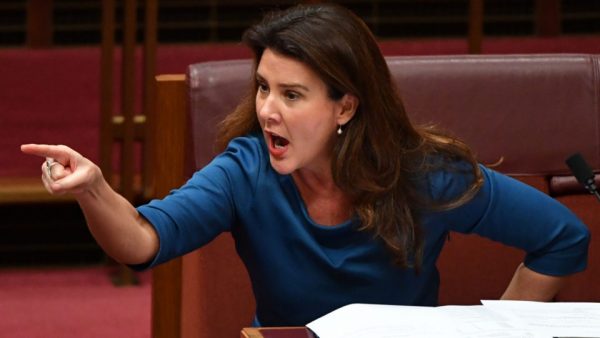
    Women deserve so much more than what Jane Hume is proposing, writes Alison Pennington. Photo: AAP

    It doesn’t matter what the crisis, when it comes to the Morrison government the message is clear: you’re on your own.

    As women across Australia lead historic mobilisations demanding government action on gendered violence week, the federal government encouraged women facing domestic abuse to raid their own superannuation accounts.

    Calling superannuation withdrawal measures of up to $10,000 “an important last resort lifeline” for women experiencing domestic violence, Minister for Superannuation, Financial Services and the Digital Economy Jane Hume later announced the policy would be reviewed following concerns from frontline workers about victim coercion.

    Minister Hume now proposes to strengthen the “integrity” of the scheme with safeguards protecting the free withdrawal of funds. But additional steps for accessing women’s retirement funds do not change the policy’s message: survivors of abuse must fund their own crisis supports. All the while abusers roam free – an addition of intolerable insult to injury.

    Safeguards may stop abusive partners forcing women to raid their retirement savings, but it’s not stopping the federal government. The early-release scheme is entirely consistent with the government’s clear established priorities: dismantling the superannuation system – rain, hail or shine.

    Women marching for economic security and safety are not just ignored by the government. The Coalition’s anti-superannuation crusade to transform the system into an emergency personal bank account actively exploits women’s heightened COVID-era economic vulnerability.

    Women worse off since COVID

    In the initial COVID shutdowns, women experienced greater losses of jobs and hours. Against this backdrop of women’s desperation, the federal government introduced the superannuation early release scheme. Significantly, this was introduced two weeks before the introduction of the Coronavirus Supplement and the JobKeeper wage subsidy.

    Between April and December 2020, 1.5 million women drew down their super, one-quarter of the entire female workforce. $14.9 billion was stripped from women’s already meagre retirement savings. Some 345,000 women completely emptied their accounts. Many more women aged under 20, and also those aged 36-55 (prime working years pre-retirement), withdrew from their superannuation compared to men.

    In 2018, the Coalition announced domestic violence would be added to the list of early release “compassionate grounds”. Frontline domestic violence services voiced concern back then too. Now, pressured by intensifying calls for a proactive government addressing gendered violence, the Coalition suggests “safeguards”.

    The federal government acknowledged heightened gendered violence risks during COVID. But it has still failed to give sufficient funding to the domestic violence sector, lift critical income supports for vulnerable women fleeing abuse, or introduce paid domestic violence leave into minimum labour laws. In fact, $1 million was cut from anti-domestic violence education programs in schools in the 2020 October Budget.

    Early release scheme exacerbates disadvantage

    Women already face systematic disadvantage in the superannuation system and have much lower retirement incomes: they retire with barely half the retirement savings of men. There urgently needs to be targeted reforms to prevent labour market inequalities that reduce women’s career earnings from being baked into the superannuation system as well.

    Abolishing the $450 per month minimum threshold, closing the ‘motherhood gap’ by making super payable for all paid and unpaid care-related absences, and proceeding with the legislated increase in the superannuation guarantee (to 12 per cent) are all important to boosting women’s economic security and safety.

    In the absence of real action on gendered workplace and domestic violence, the government’s superannuation early release scheme for domestic violence victims only exacerbates women’s economic insecurity.

    Women desperate for incomes to survive are more reliant on abusive partners and low-wage casual jobs, more helpless to the threat of ‘handsy’ bosses and colleagues, and below-poverty welfare payments in the future. This latest policy only increases the risks of gendered violence over women’s lifetimes.

    For women experiencing job loss, financial hardship or domestic violence, the message from the federal government is one we are getting sick of hearing: in a crisis, you’re on your own.

    Australian women deserve so much more.

    The post Wrecking superannuation, not protecting women, is the government’s priority appeared first on The Australia Institute's Centre for Future Work.