Submission to the Senate inquiry on insecure and precarious work.
Authors: Dan Nahum
Submission to the Senate inquiry on insecure and precarious work.
Authors: Dan Nahum
In this commentary, Senior Economist Alison Pennington explains how new casuals measures and the government’s wider economic policies – including in industrial relations, childcare, welfare, and fiscal spending – significantly undermine the economic security of women, entrench pay inequality, and ultimately, increase their vulnerability to gendered violence.
This commentary was originally published in Michael West Media.
Well may Scott Morrison tear up as he relates how his daughters, wife and widowed mother drive his every decision. The facts are that every move of the Coalition government ensures women are poorer, more insecure at work and more vulnerable to violence on the job. The Industrial Relations bill pushed through last week is a final nail in the coffin for women. Alison Pennington reports.
After a month of anger from women around the country about sexual harassment and the treatment of women in the workplace, federal parliament passed legislation last week that will strike a massive, lasting blow to women’s job quality and pay, entrenching pay inequality and exacerbating women’s economic insecurity.
The mainstream media has mainly focused on the fact that most of the Industrial Relations bill didn’t pass. But the cornerstone of the legislation – and the primary reason for its inception, pre-pandemic, by business lobbyists – did.
A new legal definition of casual work will allow employers to call any job a casual one. Jobs can now look and smell like permanent jobs, except that employers can legally engage you as a casual, stripping away your legal entitlements at will.
So-called “permanency conversion” rights in the legislation are so weak that employers will easily craft employment arrangements to lock in casual jobs long-term.
Employers will vary rosters sufficiently to ensure that employees will never reach the benchmarks of six and 12 months of regular schedules that should lead to permanency. In any case, employers will be allowed to refuse offers on “reasonable grounds”. And small businesses, which employ a huge 44% of all private sector employees, are exempted entirely.
The federal government’s new casual laws will expand the incidence of casual work. Women will disproportionately suffer in a labour market with diminishing opportunities to obtain secure, decent jobs because women are more likely to be in casual roles (filling 54% of all casual positions). And women’s vulnerability to casualisation is growing. Women accounted for 62% of all new casual jobs created in the period from May to November 2020.
Despite claims from employers that casual workers are compensated for the loss of entitlements and lack of predictability in rosters and tenure, nothing could be further from the truth.
Casual workers are, on average, paid far less than employees in permanent roles. Median weekly earnings of full-time casuals were 23% lower ($1080 per week) than those in permanent roles ($1400 per week), and 45% lower for casual part-time workers ($390 per week) compared with permanent part-time workers on $720 per week.
The expansion of the power of employers to use casual work in a jobs market awash with many hungry mouths desperate for paid work means more women in lower-paying, insecure jobs.
The government’s decision to subject the unemployed to a below-poverty JobSeeker rate means more women reliant on employers to survive. At every move the Liberal National party government is making Australian women poorer, more insecure and more vulnerable to violence on the job.
Treasurer Josh Frydenberg celebrates the recent fall in the unemployment rate to 5.8 per cent, claiming the recovery is well under way. But the detailed job quality data tell a very different story for women.
Women workers are “snapping back” to a world of paid work on inferior terms compared with men – fewer hours, less pay and less security.
Casual jobs accounted for 64.3% of the total growth in women’s employment from May to November last year.
Alarmingly, more than half of all the growth in women’s employment over the six-month period was in both low-hours and insecure work, with 52.4% of total growth in employees in part-time casual jobs.
Traditional full-time permanent jobs with normal entitlements (such as paid sick leave, holidays and superannuation) represented a dismal 10.4% of female employment growth from May through November.
It’s a crude fact that as women’s casual jobs were booming, business lobbyists were pushing for passage of the IR Bill on the basis that employers “lacked confidence” to hire casuals due to legal “uncertainty”. Australia was simultaneously experiencing the largest and fastest increase in casual employment in its history.
The consequences of an employment recovery overwhelmingly concentrated in part-time and casual jobs for women is more fuel for the gender pay gap fire.
The gender pay gap is most often measured by comparing the earnings of men and women in full-time jobs. But women face persistent barriers to workforce participation – including unaffordable childcare, lack of family-friendly work arrangements, and workplace discrimination. Consequently, almost half (45.1%) of all employed women are in part-time work.
Measuring the gender pay gap using total average earnings data (including both full-time and part-time workers, and bonuses and overtime as well as ordinary time wages) indicates that the gender pay gap is 31% across all jobs – a more dire, but more accurate, measure of the pay gap.
Ironically, the gender pay gap narrowed in the early stages of pandemic and recession. From late-2019 to May 2020, the gap between male and female total wage incomes declined from 31.4% to 29.6% – down by 1.8 percentage points.
But this did not represent “progress” in pay equality. The gap only closed because more than 300,000 women in low-paid casual roles lost their jobs, which increased the average earnings of those women who were able to stay connected to the workforce.
As the economy recovered from May last year, an influx of women’s lower-paying jobs widened the gender pay gap again, just as quickly. How good’s “snap back”?
Instead of improving the quantity and quality of jobs for women, governments have actively pursued policies that will exacerbate pay inequality this year and into the future.
In addition to casual work changes pushed through in the IR bill, two other policies create higher barriers to women’s participation in paid work, and suppress their pay once they get on the job.
The federal government and all states and territories (bar Tasmania and Victoria) have imposed punitive and counterproductive public sector wage freezes and caps on their workforces. This suppression of public sector pay hurts women most because they account for 61.7% of all public sector jobs.
The failure of government to provide affordable, quality childcare presents another major barrier to women’s paid work opportunities. After dangling free childcare in front of families early in the pandemic, the federal government cut supports and reintroduced fees after just three months.
The return of full-fee, high-cost childcare prices women out of paid work. More than half of women with young children outside the workforce list childcare costs as a key factor in their decision not to work. A childcare system that lets a small number of profit-driven providers determine access denies families and their children access to critical developmental education and much-needed community bonds as people emerge from pandemic-era isolation.
Rebuilding women’s economic security requires a very different approach from the bankrupt austerity agenda of government. Women need more and better quality jobs, free childcare, a superannuation system that provides genuine income security and an employment relations system that works to lift the quality, pay and safety of their jobs, not undermine it.
The post Expansion of Employer Power to Use Casual Work Hurts Women Most appeared first on The Australia Institute's Centre for Future Work.
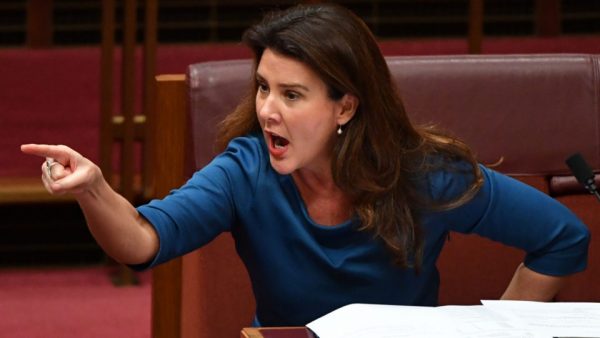
It doesn’t matter what the crisis, when it comes to the Morrison government the message is clear: you’re on your own.
As women across Australia lead historic mobilisations demanding government action on gendered violence week, the federal government encouraged women facing domestic abuse to raid their own superannuation accounts.
Calling superannuation withdrawal measures of up to $10,000 “an important last resort lifeline” for women experiencing domestic violence, Minister for Superannuation, Financial Services and the Digital Economy Jane Hume later announced the policy would be reviewed following concerns from frontline workers about victim coercion.
Minister Hume now proposes to strengthen the “integrity” of the scheme with safeguards protecting the free withdrawal of funds. But additional steps for accessing women’s retirement funds do not change the policy’s message: survivors of abuse must fund their own crisis supports. All the while abusers roam free – an addition of intolerable insult to injury.
Safeguards may stop abusive partners forcing women to raid their retirement savings, but it’s not stopping the federal government. The early-release scheme is entirely consistent with the government’s clear established priorities: dismantling the superannuation system – rain, hail or shine.
Women marching for economic security and safety are not just ignored by the government. The Coalition’s anti-superannuation crusade to transform the system into an emergency personal bank account actively exploits women’s heightened COVID-era economic vulnerability.
Women worse off since COVID
In the initial COVID shutdowns, women experienced greater losses of jobs and hours. Against this backdrop of women’s desperation, the federal government introduced the superannuation early release scheme. Significantly, this was introduced two weeks before the introduction of the Coronavirus Supplement and the JobKeeper wage subsidy.
Between April and December 2020, 1.5 million women drew down their super, one-quarter of the entire female workforce. $14.9 billion was stripped from women’s already meagre retirement savings. Some 345,000 women completely emptied their accounts. Many more women aged under 20, and also those aged 36-55 (prime working years pre-retirement), withdrew from their superannuation compared to men.
In 2018, the Coalition announced domestic violence would be added to the list of early release “compassionate grounds”. Frontline domestic violence services voiced concern back then too. Now, pressured by intensifying calls for a proactive government addressing gendered violence, the Coalition suggests “safeguards”.
The federal government acknowledged heightened gendered violence risks during COVID. But it has still failed to give sufficient funding to the domestic violence sector, lift critical income supports for vulnerable women fleeing abuse, or introduce paid domestic violence leave into minimum labour laws. In fact, $1 million was cut from anti-domestic violence education programs in schools in the 2020 October Budget.
Early release scheme exacerbates disadvantage
Women already face systematic disadvantage in the superannuation system and have much lower retirement incomes: they retire with barely half the retirement savings of men. There urgently needs to be targeted reforms to prevent labour market inequalities that reduce women’s career earnings from being baked into the superannuation system as well.
Abolishing the $450 per month minimum threshold, closing the ‘motherhood gap’ by making super payable for all paid and unpaid care-related absences, and proceeding with the legislated increase in the superannuation guarantee (to 12 per cent) are all important to boosting women’s economic security and safety.
In the absence of real action on gendered workplace and domestic violence, the government’s superannuation early release scheme for domestic violence victims only exacerbates women’s economic insecurity.
Women desperate for incomes to survive are more reliant on abusive partners and low-wage casual jobs, more helpless to the threat of ‘handsy’ bosses and colleagues, and below-poverty welfare payments in the future. This latest policy only increases the risks of gendered violence over women’s lifetimes.
For women experiencing job loss, financial hardship or domestic violence, the message from the federal government is one we are getting sick of hearing: in a crisis, you’re on your own.
Australian women deserve so much more.
The post Wrecking superannuation, not protecting women, is the government’s priority appeared first on The Australia Institute's Centre for Future Work.
IWD 2021 research on how the pandemic recovery widened the gender pay gap.
Authors: Alison Pennington
New research, released for International Women’s Day (8 March 2021), shows Australia’s recovery from the pandemic recession has widened the gender pay gap, as women’s jobs returned on a more part-time and casualised basis than for men.
The report, by the Centre for Future Work, warns that Australia’s gender pay gap could deteriorate even further in the wake of policies proposed by the Government for 2021: including the further expansion of casual work and reduced pay for part-time workers, tabled in the omnibus industrial relations bill; public sector pay caps for both federal and state employees; and a high-cost, inaccessible childcare system.
Key findings:
“The gendered nature of the pandemic recession on Australia’s labour market has markedly worsened pay inequality,” said Alison Pennington, senior economist at the Centre for Future Work.
“Women lost jobs at a greater rate than men when the pandemic hit, and as the economy has recovered, are returning to fewer jobs offered on a more casualised basis. The gendered employment recovery is disproportionately leaving women with less hours, security and pay than men—a clear example of why a simple post-COVID “snap back” was never adequate for women.
“Women have been bearing the brunt of the COVID recession while governments have targeted stimulus spending in bloke-heavy industries, neglecting investment in industries that support women’s employment, including healthcare, education and social services. To stop further deterioration in pay inequality, targeted efforts to lift women’s work and earning opportunities is critical.
“Focused investment in women’s job creation, free childcare, and wage-boosting industrial relations policies are all within reach of governments at both federal and state levels.”
The post Casual Job Surge Widens Gender Pay Gap appeared first on The Australia Institute's Centre for Future Work.
However, the BCA’s expressed concern for ‘the future of bargaining’ contradicts its support for the Government’s omnibus bill which will further undermine genuine bargaining and suppress already record-low wage growth.
“The Business Council of Australia celebrates the benefits of enterprise agreement (EA) coverage by comparing higher average wage outcomes obtained under EAs with other pay-setting methods. Ironically, this endorsement is offered in their support for the Government’s omnibus IR Bill which will result in an enterprise bargaining system involving less union representation and reduced scrutiny of sub-par EAs by the regulator,” said Alison Pennington, senior economist at the Australia Institute’s Centre for Future Work.
“However, empirical data proves union representation is essential to achieving higher wage gains in EAs – the very advantage that the Business Council of Australia extolls.
“By weakening the ‘better off overall test’ (BOOT), watering down scrutiny and approval processes, and introducing 21-day approval deadlines, the government’s IR Bill will accelerate growth in non-union EAs. For the last 10 years, non-union EAs have delivered lower wage increases than union-covered EAs. Alarmingly, the majority of non-union EAs have not specified any wage increases at all.
“These sub-par EAs are what the business lobby want more of, but they will not ‘save’ enterprise bargaining. More non-union EAs will come at the expense of genuine collective bargaining, and would produce a decline in average wage increases for EA-covered workers.
“In fact, the BCA’s proposals would take the “bargaining” out of enterprise bargaining, and wage increases out of enterprise agreements.
“Do not be fooled by business lobbyist ‘complexity’ claims. The collapse of enterprise bargaining in the private sector is due to long-term structural factors including de-unionisation, employer resistance to genuine bargaining, full legal protection for free-riding, and failure of the Fair Work Act to support genuine bargaining in EA formation.
“The current EA system has produced a long-term decline in independent employee representation, especially in the private sector.
“Rebuilding collective bargaining and arresting wage stagnation will require a very different direction in reforming Australia’s IR laws, including the phase-out of non-union EAs, genuine review and approval processes, and multi-employer and sectoral bargaining.”
Key findings from Centre for Future Work research:
The post Business Council of Australia Research Confirms Centre for Future Work Research appeared first on The Australia Institute's Centre for Future Work.
In this short, accessible commentary, Senior Economist Alison Pennington outlines how the pandemic, the resulting recession and government COVID-era policies have increased risks to migrant workers’ financial security, and health and safety. Building more secure, inclusive labour markets can reduce risks that future major events don’t hit the most vulnerable hardest.
This commentary was prepared for presentation to the Migrant Workers Centre Conference, November 2020.
by Alison Pennington, Senior Economist at Centre for Future Work
COVID infections continue to sweep Europe and the US while Australia celebrates multiple days without any cases of community transmission. But Australia’s public health success has not come without significant economic and social hardship for large sections of our community – especially migrant workers. Thousands of migrant workers were pulled off the job to stop the spread of COVID-19, and excluded from key government income support programs including JobSeeker and JobKeeper. Temporary migrant workers are still left without access to Medicare.
As the economy slowly recovers from recession, migrant workers will face even greater hardship in accessing decent jobs and incomes. The expiration of temporary work visas without supports to reconnect with new employers, and in jobs that pay enough, will expose migrant workers to more intense exploitation.
The federal government’s response to the unprecedented COVID-19 economic crisis has included big spending on tax cuts, subsidies and other business concessions as part of its “business-led recovery”. But there are many problems with how the government thinks about the economy, that will mean the economic crisis will be longer and more painful than it needs to be.
The pandemic has left deep cuts in the economy: two million people (15% of labour force) are either unemployed, working far fewer hours than normal, or have left the labour market all together since the March lockdowns; consumer spending has not fully recovered after lockdown restrictions were lifted and people prefer to save in preparation for harder times. Companies are focused on recovering or maintaining profits, cutting investments in their businesses, and cutting spending on employment and wages. Private investments have been decreasing for years and will not miraculously rebound during a recession. Trusting the private sector to lead our post-COVID economic recovery therefore is like hoping for a miracle.
Income tax cuts are mainly symbolic and do not have real and lasting impacts on boosting spending in the economy. In fact, normal pay rises are far more effective than tax cuts because the effect of wage growth is permanent and cumulative. The announced tax cuts are also unfairly designed to benefit high-income earners. 88 per cent of the combined permanent benefit of the tax cuts will go to highest-fifth of income earners whereas low- and middle-income earners will get only a one-time rebate of $1,080 at the next tax return.
Wage growth is expected to stay at 1.25 per cent in 2021 – enough only to match the slow rise in consumer prices. But a higher unemployment rate and continued increase in part-time and casual jobs will cut household incomes even more. If the government adopted measures to strengthen wages including higher minimum wages and stronger collective bargaining rights, our recovery would be on a better track.
Youth, women, migrant workers and long-term unemployed are in most need of targeted job-creation policies. But the federal government has presented no plan to create jobs for the millions of unemployed, underemployed and disenfranchised who want and need paid work. The JobMaker program provides a subsidy for 12 months to employers creating new jobs for young workers on unemployment payments. It is a short-sighted initiative that will not reach its intended claim of creating 450,000 jobs (Treasury estimate now 45,000). There is no guarantee young workers will maintain employment once the government stops paying for the subsidy. Without job protections, the program will encourage the “churning” of vulnerable young workers in low-wage, insecure jobs. It could also displace existing workers and discourage the hiring of others. Migrant workers have already experienced mass redundancies when employers chose to engage workers who qualified for the JobKeeper subsidy. Migrant worker displacement may occur under JobMaker.
Despite Australia’s macroeconomic weakness, the government intends to decrease spending by billions in cuts to the JobKeeper and Coronavirus Supplement payments in March 2021. The impacts on the jobs and incomes of low and middle-income workers will be disastrous. The real way to overcome the recession will be to restore the capacity of people to work, earn and be healthy, engaged members of a more inclusive Australian economy. This can be achieved only when the government commits to a long-term, ambitious vision for economic and social change, backed by substantial and sustained public spending. This vision should create more secure jobs, invest in climate-friendly industries, and strengthen and expand our public services like healthcare, education and skills.
Rather than wait for private sector investment, the federal and state governments can expand direct public sector employment now. They can also ensure all people residing in Australia are protected from poverty and insecurity now. Urgent measures should be taken immediately to address the pronounced risks to migrant workers’ financial security, and health and safety experienced during this crisis:
The pandemic has shone a light on the growing scourge of insecure work. Around half of all employment in Australia has one or more dimensions of precarity including casual, temporary, part-time insufficient-hours work, and self-employment. Precarious work contributed to the community spread of disease, such as in the private aged care system where widespread practices of multiple jobholding led to virus transmission between facilities.
We have worked together to eradicate COVID-19, and we can work together to eradicate insecure work. Working to build more secure labour markets for all is about reducing risks that major events don’t hit the most vulnerable hardest. Job creating investment, quality public education and skills systems, income supports for all, and extending minimum labour standards like Award wages and collective bargaining are critical to an inclusive post-COVID recovery. And by strengthening the collective efforts of workers to take action in their unions, we can put good jobs and incomes in the driving seat of Australia’s economic recovery.
The post Migrant Workers Abandoned in the COVID Recovery appeared first on The Australia Institute's Centre for Future Work.
With new stay-at-home orders covering many parts of the province, Ontarians are settling in for a month (at least) of daunting isolation. Restrictions are also being tightened in other provinces to slow the spread of COVID-19, until vaccines can turn the tide of the pandemic.
Despite accelerating infection and overflowing hospitals, many oppose the new restrictions on grounds that their economic costs are just too high. Business lobbyists grumble that health rules on retailers, airlines, cinemas, ski resorts, gyms, and more are onerous and unfair. Each sector invokes comparisons to others which supposedly get off easier. The common thread in their resistance is an assumption that strong health restrictions are deeply damaging the economy.
As the pandemic rolls on, however, it is increasingly clear that the best way to protect the economy is to stop COVID. Yes: lockdowns reduce economic activity and employment. But not locking down, letting the virus run rampant, causes more economic damage — on top of the toll in lives and suffering. Anyone concerned about the economy should be pleading for fast, powerful lockdowns, not demanding a return to business-as-usual.
The correlation between controlling contagion and economic recovery is clear across Canadian provinces: those with fewer COVID cases have achieved the strongest employment results since the pandemic hit. It’s not often that New Brunswick leads the nation in employment growth — but it did last year. Its near-elimination of the virus was the obvious reason.
In this context, the protestations of premiers Doug Ford and Jason Kenney that fighting COVID must be “balanced” against the interests of business were always self-defeating. Even if they were motivated solely by desire to protect business, their top priority should have been stopping COVID. The faster and harder that battle was waged, the better business fared.
The correlation between COVID suppression and economic performance is also obvious in international data. Several countries moved fast with severe but temporary restrictions on mobility and business; and they are now harvesting the fruits of their foresight. COVID-slaying nations like Australia, China, New Zealand, South Korea and Taiwan are already enjoying powerful and sustained economic recoveries. Their economies (forecast to grow by five to eight per cent this year) are racing far ahead of those still lurching from one wave of infection to the next.
No one escaped the economic fallout of the pandemic. But after powerful action to suppress contagion, these countries are now recovering strongly and predictably. Elsewhere, the economic outlook is far less certain. In Canada, for example, our hopeful summertime recovery is already disintegrating: employment is now falling again. America, Britain, and other places where COVID suppression failed miserably are faring even worse.
A particularly powerful illustration of the link between public health and economic recovery is provided by the experience of Victoria, the second largest state in Australia. After initial success limiting COVID-19’s spread, a second wave took hold in Melbourne (Victoria’s capital), infecting 600 people per day by early August. The state government ordered a strict lockdown, more severe than anything yet experienced in Canada: overnight curfew, closure of most workplaces, and strict bans on social gatherings and travel.
The government was pilloried for its response — facing sustained attacks from its federal counterpart, business groups, and conservative commentators, all lamenting Victoria’s descent into “dictatorship.” Yet after 111 long days, Victoria achieved something almost unheard of: mass community spread was stopped, and new cases fell to zero by late October. Now the state economy is blossoming: employment rebounded 2.2 per cent in November alone, retail sales grew 22 per cent the same month, and Victorians are flocking back to restaurants, pubs, and malls. All those CEOs whining about Canada’s late and half-hearted restrictions must be drooling with envy.
Leaders like Kenney and Ford were unduly influenced by short-sighted concern with business profits. Their reticence has created needless harm, for both public health and the economy. If we’d moved faster and more powerfully to limit contagion, business would already be better off.
The economy is made up of human beings who work, produce, and consume. There’s no tradeoff between the economy and the health of those same human beings. The sooner we recognize they are one and the same, the sooner we can finally get serious about winning this battle.
Jim Stanford, director of the Centre for Future Work in Vancouver, is a freelance contributing columnist for the Star. Follow him on Twitter: @jimbostanford
The post Yes, lockdowns mean lost jobs. But data shows that not locking down causes much more economic damage appeared first on The Australia Institute's Centre for Future Work.